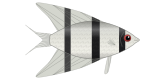
Angelfish
Pterophyllum scalare
Tall, graceful cichlids for tall tanks of 30 gallons and up; adults eat neon tetras and shrimp, so stock around them.
Key facts
- Body length
- 3.5 in without fins
- Minimum tank
- 32 gallons
- Group
- Alone is fine
- Temperament
- Semi-aggressive
- Care level
- 3 / 5
- Lifespan
- 10–12 years
- Diet
- Cichlid pellets, flakes, frozen bloodworm and mysis
- Origin
- Amazon basin, South America
- Hardier than41%
- Bigger than55%
- Calmer than28%
Water: their range vs yours
Angelfish tank mates
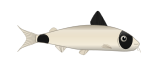
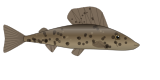
- Panda corydorasGets along in shared water.Good mates
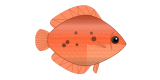
- Blood parrot cichlidGets along in shared water.Good mates
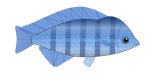
- Blue dolphin cichlidGets along in shared water.Good mates
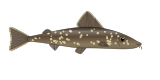
- Bristlenose plecoGets along in shared water.Good mates
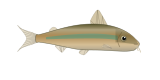
- Bronze coryGets along in shared water.Good mates
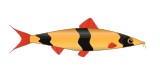
- Clown loachGets along in shared water.Good mates
- Common plecoGets along in shared water.Good mates
- DemasoniGets along in shared water.Good mates
- DiscusGets along in shared water.Good mates
- Dwarf gouramiGets along in shared water.Good mates
- Fairy cichlidGets along in shared water.Good mates
- Firemouth cichlidGets along in shared water.Good mates
- Black widow tetraAngelfish eats small fish: Black widow tetra.Risky
- Cherry barbAngelfish can eat young or small Cherry barb; adults are big enough to be safe.Risky
- GoldfishGoldfish needs cool water; angelfish need tropical heat.Risky
- Honey gouramiAngelfish eats small fish: Honey gourami.Risky
- KribensisAngelfish eats small fish: Kribensis.Risky
- Kuhli loachAngelfish eats small fish: Kuhli loach.Risky
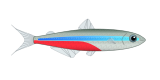
- Neon tetraAngelfish can eat Neon tetra: prey body depth 0.7 cm ≤ mouth 2.3 cm.Avoid
- Harlequin rasboraAngelfish can eat Harlequin rasbora: prey body depth 1.1 cm ≤ mouth 2.3 cm.Avoid
- Fancy guppyAngelfish can eat Fancy guppy: prey body depth 0.8 cm ≤ mouth 2.3 cm.Avoid
- OtocinclusAngelfish can eat Otocinclus: prey body depth 0.7 cm ≤ mouth 2.3 cm.Avoid
- Cherry shrimpAngelfish can eat Cherry shrimp: prey body depth 0.8 cm ≤ mouth 2.3 cm.Avoid
- BettaBoth are territorial; the betta loses fins.Avoid
How we check
The numbers the tank model uses for angelfish: water as ideal and tolerated ranges, bioload from adult mass, space, flow and how they act on other species.
- Standard length
- 9 cm (SL)
- Adult mass
- 21.87 g
- Bioload at 25 °C
- 7.32 BU
- Min. water
- 100 L net
- Min. footprint
- 75 × 30 cm per group
- Min. height
- 45 cm
- Group
- 1+ (best 5)
- Swims in
- middle, top
- Flow
- low
- Body / fins
- compressed disc, long trailing fins
- Diet type
- omnivore meat
- Fin nipper
- none
- Sensitive to
- —
Sources: Seriously Fish: Pterophyllum scalare
Care notes
Angelfish grow as tall as they are long and need tanks at least 18 inches tall with open swimming space between plants.
They are calm cichlids but still predators: anything that fits in an adult’s mouth, from neons to shrimp, is food.
Questions
What size tank does a angelfish need?
At least 32 gallons (100 litres of water after decor). Adults reach about 3.5 inches without fins.
How many angelfish should be kept together?
One is fine. They do not need company of their own kind.
What water do angelfish need?
77–84 °F, pH 6–7 and 3–12 dGH. Angelfish come from Amazon basin, South America.
How long do angelfish live?
10–12 years with good care.
What fish can live with angelfish?
Good tank mates include Panda corydoras, Blood parrot cichlid, Blue dolphin cichlid, Bristlenose pleco and Bronze cory. Each is checked both ways for size, fin nipping, temperament, territory and shared water.