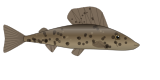
Common pleco
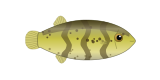
Pterygoplichthys pardalis
The classic store 'algae eater' that grows to nearly two feet, fouls the water and eats less algae with age; a fish for very large tanks only.
Key facts
- Body length
- 22.8 in without fins
- Minimum tank
- 203 gallons
- Group
- Alone is fine
- Temperament
- Peaceful
- Care level
- 4 / 5
- Lifespan
- Not well documented
- Diet
- Algae wafers, vegetables, sinking pellets
- Origin
- Amazon basin, South America
- Hardier than29%
- Bigger than99%
- Calmer than68%
Water: their range vs yours
Common pleco tank mates
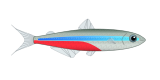
- Neon tetraGets along in shared water.Good mates
- Harlequin rasboraGets along in shared water.Good mates
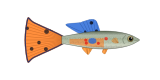
- Fancy guppyGets along in shared water.Good mates
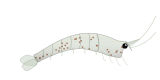
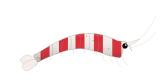
- Cherry shrimpGets along in shared water.Good mates
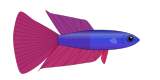
- BettaGets along in shared water.Good mates
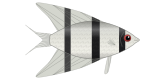
- AngelfishGets along in shared water.Good mates
- Amano shrimpGets along in shared water.Good mates
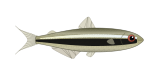
- Black neon tetraGets along in shared water.Good mates
- Black widow tetraGets along in shared water.Good mates
- Blue dolphin cichlidGets along in shared water.Good mates
- Bronze coryGets along in shared water.Good mates
- Cardinal tetraGets along in shared water.Good mates
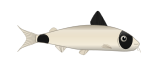
- Panda corydorasAmazon sailfin catfish (common pleco) attacks fish with a similar shape or colour: Panda corydoras.Risky
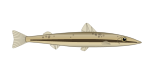
- OtocinclusAmazon sailfin catfish (common pleco) attacks fish with a similar shape or colour: Otocinclus.Risky
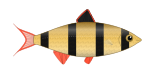
- Tiger barbTiger barb nips fins; Amazon sailfin catfish (common pleco) is vulnerable (slow swimmer). Risk is reduced: the group is at least the recommended size.Risky
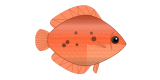
- Blood parrot cichlidAmazon sailfin catfish (common pleco) outcompetes the slow-eating Blood parrot cichlid for food; target-feed to make sure it eats.Risky
- Bristlenose plecoAmazon sailfin catfish (common pleco) attacks fish with a similar shape or colour: Bristlenose pleco.Risky
- DiscusAmazon sailfin catfish (common pleco) outcompetes the slow-eating Discus for food; target-feed to make sure it eats.Risky
- Iridescent sharkIridescent shark can eat Amazon sailfin catfish (common pleco): prey body depth 9.2 cm ≤ mouth 32.5 cm.Avoid
- African clawed frogAfrican clawed frog should only be kept in a single-species tank.Avoid
- Marbled crayfishMarbled crayfish should only be kept in a single-species tank.Avoid
- AxolotlAxolotl should only be kept in a single-species tank.Avoid
- Crystal red shrimpCrystal red shrimp should only be kept in a single-species tank.Avoid
- Figure eight pufferFigure eight puffer nips fins; Amazon sailfin catfish (common pleco) is vulnerable (slow swimmer).Avoid



How we check
The numbers the tank model uses for common plecos: water as ideal and tolerated ranges, bioload from adult mass, space, flow and how they act on other species.
- Standard length
- 57.8 cm (TL)
- Adult mass
- 3848.26 g
- Bioload at 25 °C
- 186.95 BU
- Min. water
- 650 L net
- Min. footprint
- 180 × 60 cm per specimen
- Group
- 1+ (best 1)
- Swims in
- bottom
- Flow
- moderate
- Body / fins
- depressed flat, normal fins
- Diet type
- herbivore
- Fin nipper
- none
- Sensitive to
- copper
Sources: FishBase: Pterygoplichthys pardalis · ScotCat: Pterygoplichthys pardalis · Wikipedia: Pterygoplichthys pardalis
Care notes
Common plecos come from lowland rivers of the Amazon basin, where they dig burrows in the banks. This is the species usually sold simply as a pleco, and it reaches about 23 inches.
Adults need a tank at least 6 feet long, roughly 180 gallons, with powerful filtration because the waste load is huge. They are invasive in several countries, so never release one; rehome it instead.
Questions
What size tank does a common pleco need?
At least 203 gallons (650 litres of water after decor). Adults reach about 22.8 inches without fins.
How many common plecos should be kept together?
One is fine. They do not need company of their own kind.
What water do common plecos need?
77–82 °F, pH 7–7.5 and 10–20 dGH. Common plecos come from Amazon basin, South America.
How long do common plecos live?
Not well documented with good care.
What fish can live with common plecos?
Good tank mates include Neon tetra, Harlequin rasbora, Fancy guppy, Cherry shrimp and Betta. Each is checked both ways for size, fin nipping, temperament, territory and shared water.