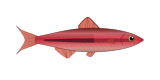
Cherry barb
Puntius titteya
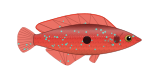
One of the most peaceful barbs: males glow cherry red and leave fins alone, making it great for planted community tanks.
Key facts
- Body length
- 2 in without fins
- Minimum tank
- 17 gallons
- Group
- 6+
- Temperament
- Peaceful
- Care level
- 1 / 5
- Lifespan
- Not well documented
- Diet
- Flakes, micro pellets, frozen bloodworm and daphnia
- Origin
- Sri Lanka
- Hardier than81%
- Bigger than29%
- Calmer than68%
Water: their range vs yours
Cherry barb tank mates
- Neon tetraGets along in shared water.Good mates
- Harlequin rasboraGets along in shared water.Good mates
- Fancy guppyGets along in shared water.Good mates
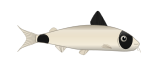
- Panda corydorasGets along in shared water.Good mates
- OtocinclusGets along in shared water.Good mates
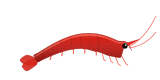
- Cherry shrimpGets along in shared water.Good mates
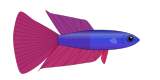
- BettaGets along in shared water.Good mates
- Tiger barbGets along in shared water.Good mates
- Amano shrimpGets along in shared water.Good mates
- Black neon tetraGets along in shared water.Good mates
- Black widow tetraGets along in shared water.Good mates
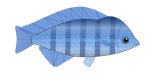
- Blood parrot cichlidGets along in shared water.Good mates
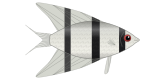
- AngelfishAngelfish can eat young or small Cherry barb; adults are big enough to be safe.Risky
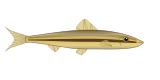
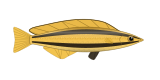
- Chinese algae eaterChinese algae eater attacks fish with a similar shape or colour: Cherry barb.Risky
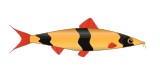
- Clown loachClown loach attacks fish with a similar shape or colour: Cherry barb.Risky
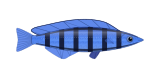
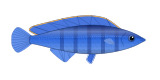
- DemasoniDemasoni attacks fish with a similar shape or colour: Cherry barb.Risky
- Golden mbunaGolden mbuna attacks fish with a similar shape or colour: Cherry barb.Risky
- Peacock cichlidMalawi butterfly peacock attacks fish with a similar shape or colour: Cherry barb.Risky
- Blue dolphin cichlidBlue dolphin cichlid can eat Cherry barb: prey body depth 1.1 cm ≤ mouth 6.3 cm.Avoid
- Convict cichlidConvict cichlid can eat Cherry barb: prey body depth 1.1 cm ≤ mouth 3.8 cm.Avoid
- Firemouth cichlidFiremouth cichlid can eat Cherry barb: prey body depth 1.1 cm ≤ mouth 3.0 cm.Avoid
- GoldfishGoldfish can eat Cherry barb: prey body depth 1.1 cm ≤ mouth 3.0 cm.Avoid
- Iridescent sharkIridescent shark can eat Cherry barb: prey body depth 1.1 cm ≤ mouth 32.5 cm.Avoid
- Jewel cichlidJewel cichlid can eat Cherry barb: prey body depth 1.1 cm ≤ mouth 3.8 cm.Avoid
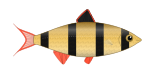
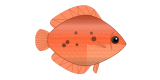
How we check
The numbers the tank model uses for cherry barbs: water as ideal and tolerated ranges, bioload from adult mass, space, flow and how they act on other species.
- Standard length
- 5 cm (SL)
- Adult mass
- 3.19 g
- Bioload at 25 °C
- 2.01 BU
- Min. water
- 54 L net
- Min. footprint
- 60 × 30 cm per group
- Group
- 6+ (best 10)
- Swims in
- middle, bottom
- Flow
- low
- Body / fins
- fusiform, normal fins
- Diet type
- omnivore
- Fin nipper
- none
- Sensitive to
- —
Sources: Seriously Fish: Puntius titteya · FishBase: Puntius titteya
Care notes
Cherry barbs come from shaded forest streams of Sri Lanka. Males colour up most intensely when kept in a group with females.
Keep six to ten in a 15 gallon tank or larger. They do not nip fins, though they will eat shrimplets and fry.
Questions
What size tank does a cherry barb need?
At least 17 gallons (54 litres of water after decor). Adults reach about 2 inches without fins.
How many cherry barbs should be kept together?
Keep at least 6, ideally 10 or more: fewer feel exposed and hide or turn nippy.
What water do cherry barbs need?
73–81 °F, pH 6–8 and 2–20 dGH. Cherry barbs come from Sri Lanka.
How long do cherry barbs live?
Not well documented with good care.
What fish can live with cherry barbs?
Good tank mates include Neon tetra, Harlequin rasbora, Fancy guppy, Panda corydoras and Otocinclus. Each is checked both ways for size, fin nipping, temperament, territory and shared water.