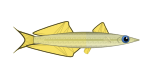
Forktail blue-eye
Pseudomugil furcatus
A small blue-eyed fish with yellow, forked fins; a peaceful top-water school for planted tanks with hard water.
Key facts
- Body length
- 2 in without fins
- Minimum tank
- 17 gallons
- Group
- 8+
- Temperament
- Peaceful
- Care level
- 3 / 5
- Lifespan
- 1–2 years
- Diet
- Micro pellets, crushed flakes, baby brine shrimp
- Origin
- Eastern Papua New Guinea
- Hardier than22%
- Bigger than29%
- Calmer than68%
Water: their range vs yours
Forktail blue-eye tank mates
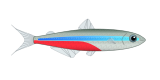
- Neon tetraGets along in shared water.Good mates
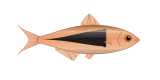
- Harlequin rasboraGets along in shared water.Good mates
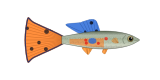
- Fancy guppyGets along in shared water.Good mates
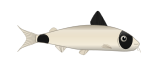
- Panda corydorasGets along in shared water.Good mates
- OtocinclusGets along in shared water.Good mates
- Cherry shrimpGets along in shared water.Good mates
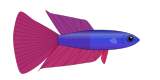
- BettaGets along in shared water.Good mates
- Tiger barbGets along in shared water.Good mates
- Amano shrimpGets along in shared water.Good mates
- Black neon tetraGets along in shared water.Good mates
- Black widow tetraGets along in shared water.Good mates
- Blood parrot cichlidGets along in shared water.Good mates
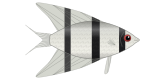
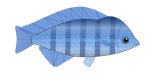
- AngelfishAngelfish can eat young or small Forktail blue-eye; adults are big enough to be safe.Risky
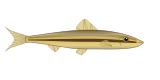
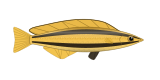
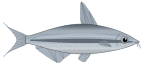
- Chinese algae eaterChinese algae eater attacks fish with a similar shape or colour: Forktail blue-eye.Risky
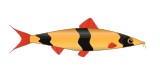
- Clown loachClown loach attacks fish with a similar shape or colour: Forktail blue-eye.Risky
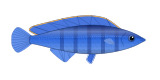
- DemasoniDemasoni attacks fish with a similar shape or colour: Forktail blue-eye.Risky
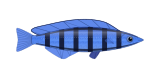
- Golden mbunaGolden mbuna attacks fish with a similar shape or colour: Forktail blue-eye.Risky
- Peacock cichlidMalawi butterfly peacock attacks fish with a similar shape or colour: Forktail blue-eye.Risky
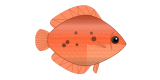
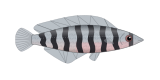
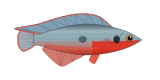
- Blue dolphin cichlidBlue dolphin cichlid can eat Forktail blue-eye: prey body depth 1.1 cm ≤ mouth 6.3 cm.Avoid
- Convict cichlidConvict cichlid can eat Forktail blue-eye: prey body depth 1.1 cm ≤ mouth 3.8 cm.Avoid
- Firemouth cichlidFiremouth cichlid can eat Forktail blue-eye: prey body depth 1.1 cm ≤ mouth 3.0 cm.Avoid
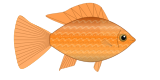
- GoldfishGoldfish can eat Forktail blue-eye: prey body depth 1.1 cm ≤ mouth 3.0 cm.Avoid
- Iridescent sharkIridescent shark can eat Forktail blue-eye: prey body depth 1.1 cm ≤ mouth 32.5 cm.Avoid
- Jewel cichlidJewel cichlid can eat Forktail blue-eye: prey body depth 1.1 cm ≤ mouth 3.8 cm.Avoid
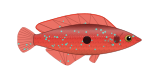
How we check
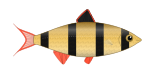
The numbers the tank model uses for forktail blue-eyes: water as ideal and tolerated ranges, bioload from adult mass, space, flow and how they act on other species.
- Standard length
- 5 cm (SL)
- Adult mass
- 2.95 g
- Bioload at 25 °C
- 1.87 BU
- Min. water
- 54 L net
- Min. footprint
- 60 × 30 cm per group
- Group
- 8+ (best 10)
- Swims in
- top, middle
- Flow
- moderate
- Body / fins
- fusiform, normal fins
- Diet type
- micropredator
- Fin nipper
- none
- Sensitive to
- —
Sources: Seriously Fish: Pseudomugil furcatus · FishBase: Pseudomugil furcatus
Care notes
Forktail blue-eyes come from overgrown forest streams of eastern Papua New Guinea. Males spar over females but ignore other species.
Keep eight to ten, with more females than males, in a 15 gallon tank or larger with hard, slightly alkaline water. They are often short-lived, so expect to restock or let them breed.
Questions
What size tank does a forktail blue-eye need?
At least 17 gallons (54 litres of water after decor). Adults reach about 2 inches without fins.
How many forktail blue-eyes should be kept together?
Keep at least 8, ideally 10 or more: fewer feel exposed and hide or turn nippy.
What water do forktail blue-eyes need?
75–79 °F, pH 7–8 and 15–30 dGH. Forktail blue-eyes come from Eastern Papua New Guinea.
How long do forktail blue-eyes live?
1–2 years with good care.
What fish can live with forktail blue-eyes?
Good tank mates include Neon tetra, Harlequin rasbora, Fancy guppy, Panda corydoras and Otocinclus. Each is checked both ways for size, fin nipping, temperament, territory and shared water.