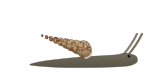
Malaysian trumpet snail
Melanoides tuberculata
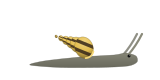
A cone-shelled snail that lives in the substrate and stirs it; it breeds without a mate and gives birth to live young, so it fills a tank fast.
Key facts
- Body length
- 1 in without fins
- Minimum tank
- 2 gallons
- Group
- Alone is fine
- Temperament
- Peaceful
- Care level
- 1 / 5
- Lifespan
- Not well documented
- Diet
- Detritus, leftover food, algae
- Origin
- North Africa and South Asia
- Hardier than95%
- Bigger than5%
- Calmer than68%
Water: their range vs yours
Malaysian trumpet snail tank mates
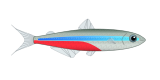
- Neon tetraGets along in shared water.Good mates
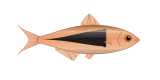
- Harlequin rasboraGets along in shared water.Good mates
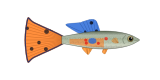
- Fancy guppyGets along in shared water.Good mates
- Panda corydorasGets along in shared water.Good mates
- OtocinclusGets along in shared water.Good mates
- Cherry shrimpGets along in shared water.Good mates
- BettaGets along in shared water.Good mates
- AngelfishGets along in shared water.Good mates
- Amano shrimpGets along in shared water.Good mates
- Black neon tetraGets along in shared water.Good mates
- Black widow tetraGets along in shared water.Good mates
- Blood parrot cichlidGets along in shared water.Good mates
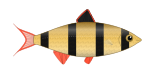
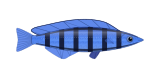
- Tiger barbTiger barb nips fins; Malaysian trumpet snail is vulnerable (slow swimmer). Risk is reduced: the group is at least the recommended size.Risky
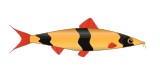
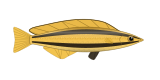
- Clown loachClown loach eats small snails: Malaysian trumpet snail (SF).Risky
- Convict cichlidConvict cichlid (aggressive) will bully the peaceful Malaysian trumpet snail.Risky
- DemasoniDemasoni (aggressive) will bully the peaceful Malaysian trumpet snail.Risky
- Golden mbunaGolden mbuna (aggressive) will bully the peaceful Malaysian trumpet snail.Risky
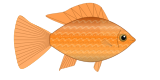
- GoldfishGoldfish needs cool water; Malaysian trumpet snails need tropical heat.Risky
- Assassin snailAssassin snail eats small snails: Malaysian trumpet snail.Avoid
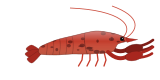
- Red swamp crayfishRed swamp crayfish eats small snails: Malaysian trumpet snail.Avoid
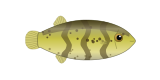
- Figure eight pufferFigure eight puffer eats small snails: Malaysian trumpet snail.Avoid
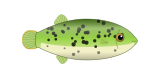
- Green spotted pufferGreen spotted puffer eats small snails: Malaysian trumpet snail.Avoid
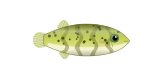
- Pea pufferPea puffer eats small snails: Malaysian trumpet snail (улитки — его корм).Avoid
How we check
The numbers the tank model uses for Malaysian trumpet snails: water as ideal and tolerated ranges, bioload from adult mass, space, flow and how they act on other species.
- Standard length
- 2.5 cm (shell)
- Adult mass
- 0.09 g
- Bioload at 25 °C
- 0.11 BU
- Min. water
- 5 L net
- Group
- 1+ (best 5)
- Swims in
- substrate, bottom
- Flow
- low
- Body / fins
- invertebrate, normal fins
- Diet type
- detritivore
- Fin nipper
- none
- Sensitive to
- copper
Sources: Wikipedia: Red-rimmed melania
Care notes
Malaysian trumpet snails come from North Africa and South Asia and usually reach about 1 inch. They burrow by day and come out at night.
They leave plants alone and keep sand loose, but numbers explode when food is plentiful. Never move them from tanks into the wild, since they spread invasively and host parasites.
Questions
What size tank does a malaysian trumpet snail need?
At least 2 gallons (5 litres of water after decor). Adults reach about 1 inches without fins.
How many Malaysian trumpet snails should be kept together?
One is fine. They do not need company of their own kind.
What water do Malaysian trumpet snails need?
64–77 °F, pH 7–8.5 and 0–0 dGH. Malaysian trumpet snails come from North Africa and South Asia.
How long do Malaysian trumpet snails live?
Not well documented with good care.
What fish can live with Malaysian trumpet snails?
Good tank mates include Neon tetra, Harlequin rasbora, Fancy guppy, Panda corydoras and Otocinclus. Each is checked both ways for size, fin nipping, temperament, territory and shared water.