Best fish for a 125 gallon tank
A 125 gallon (183 cm) takes the fish that outgrow everything else: oscars, larger cichlids and big plecos, with room to spare.
Checked by our tank model as a starter group in an empty, cycled 125G (183 × 46 × 53 cm) with a filter rated for it. One group per tank; mix species with the planner.
Good fits
- Fits
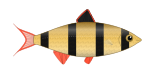
Tiger barb
Puntigrus tetrazonaBold, fast barbs that nip fins; great in a busy group of ten, a poor match for slow or long-finned fish.
group of 6 · 2.2 in · 32+ gal · 72–79°F · pH 6–7.5 - Fits
Bristlenose pleco
Ancistrus cf. cirrhosusThe go-to glass cleaner: a compact 5-inch pleco with bushy whiskers on the males that needs a cave and vegetables, not just algae.
4.9 in · 17+ gal · 70–79°F · pH 5.5–7.5 - Fits
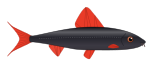
Rainbow shark
Epalzeorhynchos frenatumAn olive 'shark' with red fins, most often sold in its albino form; territorial toward lookalike bottom fish and best kept alone.
5.9 in · 76+ gal · 75–79°F · pH 6.5–8 - Fits
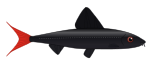
Red-tailed black shark
Epalzeorhynchos bicolorA velvet-black 'shark' with a red tail; beautiful but territorial, chasing lookalike bottom fish and its own kind as it ages.
4.9 in · 76+ gal · 72–79°F · pH 6.5–7.5 - Fits
Siamese algae eater
Crossocheilus oblongusA slim silver fish with a black stripe and one of the few that eats black beard algae; grows to about 6 inches and loves to jump.
5.9 in · 95+ gal · 75–79°F · pH 6.5–8 - Fits
Congo tetra
Phenacogrammus interruptusA large African tetra with shimmering scales and long, feathery fins on the males; peaceful but skittish, so it needs a roomy tank.
group of 6 · 3.1 in · 34+ gal · 73–79°F · pH 6–7.5 - Fits
Denison barb
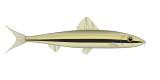
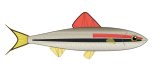
Sahyadria denisoniiA large, torpedo-shaped barb with a red line along its body; peaceful but very active, needing a long tank with flow and spotless water.
group of 6 · 4.3 in · 76+ gal · 59–77°F · pH 6.8–7.8 - Fits
Dwarf chain loach
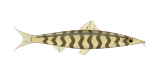
Ambastaia sidthimunkiA 2.5-inch loach with a chain-link pattern that shoals near the bottom and in midwater; fits smaller tanks but eats snails and baby shrimp.
group of 6 · 2.4 in · 23+ gal · 68–86°F · pH 5.5–7.5 - Fits
Giant danio
Devario aequipinnatusTemperature 76°F works for Giant danio, but 72–75°F is ideal.
group of 8 · 3 in · 76+ gal · 72–75°F · pH 6–8 - Fits
Neon dwarf rainbowfish
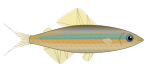
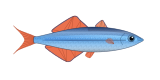
Melanotaenia praecoxA small rainbowfish with shimmering blue scales and red fins on the males; shy, schooling and in need of open swimming space.
group of 6 · 2 in · 17+ gal · 73–82°F · pH 6.8–7.5 - Fits
Yoyo loach
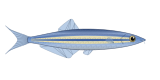
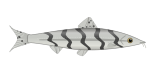
Botia almorhaeAn energetic silver-and-black loach of about 6.5 inches that excels at eating snails but can tear the fins of slow, long-finned fish.
group of 6 · 6.3 in · 76+ gal · 66–82°F · pH 6–7.5
Possible, with care
- With care
Neon tetra
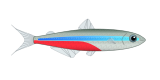
Paracheirodon innesiNeon tetra: turnover 5.1/h is above the comfortable 5/h.
group of 8 · 1.2 in · 17+ gal · 70–77°F · pH 5–7 - With care
Harlequin rasbora
Trigonostigma heteromorphaHarlequin rasbora: turnover 5.1/h is above the comfortable 5/h.
group of 8 · 1.4 in · 17+ gal · 73–81°F · pH 6–7 - With care
Fancy guppy
Poecilia reticulataGH 8 dGH is outside the Fancy guppy range 8–25 dGH.
group of 3 · 1.4 in · 13+ gal · 75–81°F · pH 7–8 - With care
Panda corydoras
Corydoras pandaPanda corydoras: turnover 5.1/h is above the comfortable 5/h.
group of 6 · 1.6 in · 17+ gal · 72–77°F · pH 6–7.2 - With care
Otocinclus
Otocinclus vittatusOtocinclus: turnover 5.1/h is above the comfortable 5/h.
group of 6 · 1.4 in · 17+ gal · 72–79°F · pH 6–7.2 - With care
Cherry shrimp
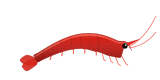
Neocaridina davidiCherry shrimp: turnover 5.1/h is above the comfortable 5/h.
group of 10 · 1.6 in · 4+ gal · 72–75°F · pH 6.5–7.8 - With care
Betta
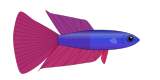
Betta splendensBetta: turnover 5.1/h is above the comfortable 3/h.
2.8 in · 11+ gal · 72–86°F · pH 6–7.5 - With care
Angelfish
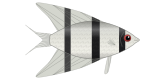
Pterophyllum scalareAngelfish: turnover 5.1/h is above the comfortable 5/h.
3.5 in · 32+ gal · 77–84°F · pH 6–7 - With care
Amano shrimp
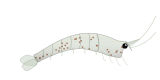
Caridina multidentataAmano shrimp: turnover 5.1/h is above the comfortable 5/h.
group of 3 · 2 in · 7+ gal · 72–77°F · pH 6.5–7.5 - With care
Black neon tetra
Hyphessobrycon herbertaxelrodiBlack neon tetra: turnover 5.1/h is above the comfortable 5/h.
group of 8 · 1.4 in · 23+ gal · 73–81°F · pH 5.5–7.5 - With care
Blood parrot cichlid
hybridBlood parrot cichlid: turnover 5.1/h is above the comfortable 5/h.
7.9 in · 36+ gal · 72–82°F · pH 6.5–8 - With care
Bronze cory
Corydoras aeneusBronze cory: turnover 5.1/h is above the comfortable 5/h.
group of 6 · 3 in · 23+ gal · 70–81°F · pH 6–8
And 72 more in the species catalog.
Too much
- Avoid
Black widow tetra
Gymnocorymbus ternetzipH 7.2 is outside the Black widow tetra range 6.0–7.0.
group of 12 · 2.4 in · 22+ gal · 68–79°F · pH 6–7 - Avoid
Blue dolphin cichlid
Cyrtocara mooriiTemperature 76°F is outside the Blue dolphin cichlid range 77–84°F.
group of 3 · 9.8 in · 80+ gal · 77–81°F · pH 8–8.5 - Avoid
Chinese algae eater
Gyrinocheilus aymonieriStocking of 162% is above the 150% limit.
group of 6 · 11 in · 95+ gal · 72–79°F · pH 6–8 - Avoid
Clown loach
Chromobotia macracanthuspH 7.2 is outside the Clown loach range 5.0–7.0.
group of 6 · 15.7 in · 202+ gal · 75–86°F · pH 5–7 - Avoid
Demasoni
Chindongo demasoni (syn. Pseudotropheus demasoni)pH 7.2 is outside the Demasoni range 7.6–8.8.
group of 6 · 3 in · 64+ gal · 75–82°F · pH 8.2–8.5 - Avoid
Discus
Symphysodon aequifasciatus (species complex)Temperature 76°F is outside the Discus range 79–86°F.
group of 5 · 5.5 in · 80+ gal · 79–86°F · pH 5–7 - Avoid
Fairy cichlid
Neolamprologus brichardipH 7.2 is outside the Fairy cichlid range 8.0–9.0.
group of 2 · 3.5 in · 34+ gal · 73–79°F · pH 8–9 - Avoid
Golden mbuna
Melanochromis auratuspH 7.2 is outside the Golden mbuna range 7.6–8.8.
group of 4 · 4.3 in · 64+ gal · 75–82°F · pH 7.6–8.8 - Avoid
Iridescent shark
Pangasianodon hypophthalmusIridescent shark: needs a 14580 L tank, this one is 446 L.
51.2 in · 4532+ gal · 72–79°F · pH 6.5–7.5 - Avoid
Kuhli loach
Pangio semicinctapH 7.2 is outside the Kuhli loach range 3.5–7.0.
group of 6 · 3.9 in · 17+ gal · 70–79°F · pH 3.5–7 - Avoid
Leopard sailfin pleco
Pterygoplichthys gibbicepspH 7.2 is outside the Leopard sailfin pleco range 5.0–7.0.
19.7 in · 187+ gal · 77–86°F · pH 5–7 - Avoid
Multies
Neolamprologus multifasciatuspH 7.2 is outside the Multies range 7.5–9.0.
group of 2 · 1.8 in · 13+ gal · 77–80°F · pH 8–8.5
And 43 more in the species catalog.
How many fish fit in 125 gallons?
The old inch-per-gallon rule ignores body shape and group size. We estimate bioload from adult mass and water temperature, compare it with what the filter and weekly water changes remove, then add the space each species needs to swim and school.
The list above checks one species at a time. To mix several, add them to your own tank: the planner checks every pair and the combined load.
Every tank is different. Set yours up once (size, water, who already lives there) and each species is checked against it.
Plan my tank