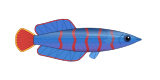
Bluefin notho
Nothobranchius rachovii
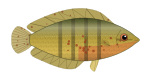
One of the most colourful annual killifish, from drying pools in Mozambique; it lives under a year, while its eggs rest for months in damp peat.
Key facts
- Body length
- 2.2 in without fins
- Minimum tank
- 13 gallons
- Group
- 2+
- Temperament
- Semi-aggressive
- Care level
- 4 / 5
- Lifespan
- 0.5–1 years
- Diet
- Live and frozen bloodworm, brine shrimp, daphnia
- Origin
- Eastern Mozambique, East Africa
- Hardier than14%
- Bigger than33%
- Calmer than28%
Water: their range vs yours
Bluefin notho tank mates
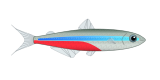
- Neon tetraGets along in shared water.Good mates
- Harlequin rasboraGets along in shared water.Good mates
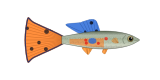
- Fancy guppyGets along in shared water.Good mates
- Panda corydorasGets along in shared water.Good mates
- OtocinclusGets along in shared water.Good mates
- Cherry shrimpGets along in shared water.Good mates
- BettaGets along in shared water.Good mates
- Tiger barbGets along in shared water.Good mates
- Amano shrimpGets along in shared water.Good mates
- Black neon tetraGets along in shared water.Good mates
- Black widow tetraGets along in shared water.Good mates
- Blood parrot cichlidGets along in shared water.Good mates
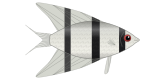
- AngelfishAngelfish eats small fish: Bluefin notho.Risky
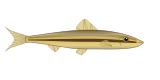
- Chinese algae eaterChinese algae eater attacks fish with a similar shape or colour: Bluefin notho.Risky
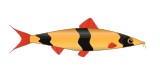
- Clown loachClown loach attacks fish with a similar shape or colour: Bluefin notho.Risky
- DemasoniDemasoni attacks fish with a similar shape or colour: Bluefin notho.Risky
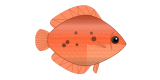
- Firemouth cichlidFiremouth cichlid can eat young or small Bluefin notho; adults are big enough to be safe.Risky
- Golden mbunaGolden mbuna attacks fish with a similar shape or colour: Bluefin notho.Risky
- Blue dolphin cichlidBlue dolphin cichlid can eat Bluefin notho: prey body depth 1.2 cm ≤ mouth 6.3 cm.Avoid
- Convict cichlidConvict cichlid can eat Bluefin notho: prey body depth 1.2 cm ≤ mouth 3.8 cm.Avoid
- Iridescent sharkIridescent shark can eat Bluefin notho: prey body depth 1.2 cm ≤ mouth 32.5 cm.Avoid
- Jewel cichlidJewel cichlid can eat Bluefin notho: prey body depth 1.2 cm ≤ mouth 3.8 cm.Avoid
- OscarOscar can eat Bluefin notho: prey body depth 1.2 cm ≤ mouth 12.3 cm.Avoid
- SeverumSeverum can eat Bluefin notho: prey body depth 1.2 cm ≤ mouth 5.0 cm.Avoid
How we check
The numbers the tank model uses for bluefin nothos: water as ideal and tolerated ranges, bioload from adult mass, space, flow and how they act on other species.
- Standard length
- 5.5 cm (SL)
- Adult mass
- 2.50 g
- Bioload at 25 °C
- 1.47 BU
- Min. water
- 41 L net
- Min. footprint
- 45 × 30 cm per pair
- Group
- 2+ (best 3)
- Swims in
- middle, bottom
- Flow
- still
- Body / fins
- fusiform, normal fins
- Diet type
- micropredator
- Fin nipper
- none
- Sensitive to
- —
Care notes
Bluefin nothos come from seasonal pools and swamps in eastern Mozambique and grow to about 2 inches. In the aquarium they live only 6 to 12 months.
A pair fits a 10-gallon tank of cool, soft water around 68–75 °F, fed on live foods. Eggs laid in peat are stored damp for 5 to 7 months before hatching, and the young mature in about three weeks.
Questions
What size tank does a bluefin notho need?
At least 13 gallons (41 litres of water after decor). Adults reach about 2.2 inches without fins.
How many bluefin nothos should be kept together?
Keep at least 2, ideally 3 or more: fewer feel exposed and hide or turn nippy.
What water do bluefin nothos need?
68–75 °F, pH 6–7.5 and 3–10 dGH. Bluefin nothos come from Eastern Mozambique, East Africa.
How long do bluefin nothos live?
0.5–1 years with good care.
What fish can live with bluefin nothos?
Good tank mates include Neon tetra, Harlequin rasbora, Fancy guppy, Panda corydoras and Otocinclus. Each is checked both ways for size, fin nipping, temperament, territory and shared water.