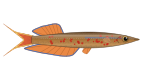
Lyretail killifish
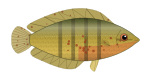
Aphyosemion australe
One of the best-loved non-annual killifish, with a lyre-shaped tail; peaceful, timid, fond of soft water and an excellent jumper.
Key facts
- Body length
- 2.4 in without fins
- Minimum tank
- 9 gallons
- Group
- 2+
- Temperament
- Peaceful, shy
- Care level
- 3 / 5
- Lifespan
- 3+ years
- Diet
- Live and frozen brine shrimp, daphnia, micro pellets
- Origin
- Coastal Gabon and Republic of Congo, Africa
- Hardier than58%
- Bigger than36%
- Calmer than68%
Water: their range vs yours
Lyretail killifish tank mates
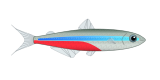
- Neon tetraGets along in shared water.Good mates
- Harlequin rasboraGets along in shared water.Good mates
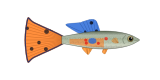
- Fancy guppyGets along in shared water.Good mates
- Panda corydorasGets along in shared water.Good mates
- OtocinclusGets along in shared water.Good mates
- Cherry shrimpGets along in shared water.Good mates
- BettaGets along in shared water.Good mates
- Amano shrimpGets along in shared water.Good mates
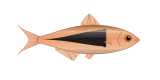
- Black neon tetraGets along in shared water.Good mates
- Black widow tetraGets along in shared water.Good mates
- Blood parrot cichlidGets along in shared water.Good mates
- Bristlenose plecoGets along in shared water.Good mates
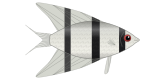
- AngelfishAngelfish eats small fish: Lyretail killifish.Risky
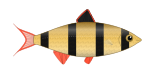
- Tiger barbTiger barb nips fins; Lyretail killifish is vulnerable (long fins). Risk is reduced: the group is at least the recommended size.Risky
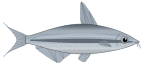
- Chinese algae eaterChinese algae eater eats slow fish: Lyretail killifish (SF: присасывается к бокам крупных соседей, объедая слизь).Risky
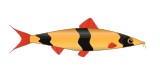
- Clown loachClown loach attacks fish with a similar shape or colour: Lyretail killifish.Risky
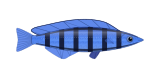
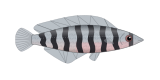
- DemasoniDemasoni attacks fish with a similar shape or colour: Lyretail killifish.Risky
- Firemouth cichlidFiremouth cichlid can eat young or small Lyretail killifish; adults are big enough to be safe.Risky
- Blue dolphin cichlidBlue dolphin cichlid can eat Lyretail killifish: prey body depth 1.3 cm ≤ mouth 6.3 cm.Avoid
- Convict cichlidConvict cichlid can eat Lyretail killifish: prey body depth 1.3 cm ≤ mouth 3.8 cm.Avoid
- Iridescent sharkIridescent shark can eat Lyretail killifish: prey body depth 1.3 cm ≤ mouth 32.5 cm.Avoid
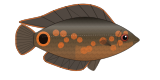
- Jewel cichlidJewel cichlid can eat Lyretail killifish: prey body depth 1.3 cm ≤ mouth 3.8 cm.Avoid
- OscarOscar can eat Lyretail killifish: prey body depth 1.3 cm ≤ mouth 12.3 cm.Avoid
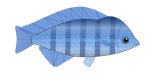
- SeverumSeverum can eat Lyretail killifish: prey body depth 1.3 cm ≤ mouth 5.0 cm.Avoid
How we check
The numbers the tank model uses for lyretail killifish: water as ideal and tolerated ranges, bioload from adult mass, space, flow and how they act on other species.
- Standard length
- 6 cm (SL)
- Adult mass
- 3.24 g
- Bioload at 25 °C
- 1.72 BU
- Min. water
- 28 L net
- Min. footprint
- 45 × 25 cm per group
- Group
- 2+ (best 3)
- Swims in
- top, middle
- Flow
- still
- Body / fins
- fusiform, long trailing fins
- Diet type
- micropredator
- Fin nipper
- none
- Sensitive to
- —
Sources: Seriously Fish: Aphyosemion australe
Care notes
Lyretail killifish come from coastal swamps and streams of Gabon and Congo and grow to about 2.5 inches. In captivity they often live more than 3 years.
A pair or trio fits a 5–10 gallon tank with soft, acidic water and a tight lid. They lose out at feeding time, so keep them alone or with very calm fish.
Questions
What size tank does a lyretail killifish need?
At least 9 gallons (28 litres of water after decor). Adults reach about 2.4 inches without fins.
How many lyretail killifish should be kept together?
Keep at least 2, ideally 3 or more: fewer feel exposed and hide or turn nippy.
What water do lyretail killifish need?
70–75 °F, pH 5.5–7 and 1–10 dGH. Lyretail killifish come from Coastal Gabon and Republic of Congo, Africa.
How long do lyretail killifish live?
3+ years with good care.
What fish can live with lyretail killifish?
Good tank mates include Neon tetra, Harlequin rasbora, Fancy guppy, Panda corydoras and Otocinclus. Each is checked both ways for size, fin nipping, temperament, territory and shared water.