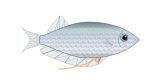
Moonlight gourami
Trichopodus microlepis
A large silvery gourami with a calm but nervous temperament; it needs a roomy tank, floating plants and quiet tank mates.
Key facts
- Body length
- 5.9 in without fins
- Minimum tank
- 26 gallons
- Group
- Alone is fine
- Temperament
- Peaceful, shy
- Care level
- 1 / 5
- Lifespan
- Not well documented
- Diet
- Flakes, pellets, frozen bloodworm and brine shrimp
- Origin
- Vietnam, Cambodia and Thailand
- Hardier than62%
- Bigger than73%
- Calmer than68%
Water: their range vs yours
Moonlight gourami tank mates
- AngelfishGets along in shared water.Good mates
- Blood parrot cichlidGets along in shared water.Good mates
- Blue dolphin cichlidGets along in shared water.Good mates
- Bristlenose plecoGets along in shared water.Good mates
- Clown loachGets along in shared water.Good mates
- Common plecoGets along in shared water.Good mates
- DiscusGets along in shared water.Good mates
- Firemouth cichlidGets along in shared water.Good mates
- Golden mbunaGets along in shared water.Good mates
- Leopard sailfin plecoGets along in shared water.Good mates
- Peacock cichlidGets along in shared water.Good mates
- Rosy barbGets along in shared water.Good mates
- Bronze coryMoonlight gourami can eat young or small Bronze cory; adults are big enough to be safe.Risky
- Chinese algae eaterChinese algae eater eats slow fish: Moonlight gourami (SF: присасывается к бокам крупных соседей, объедая слизь).Risky
- Convict cichlidConvict cichlid (aggressive) will bully the peaceful Moonlight gourami.Risky
- DemasoniMoonlight gourami can eat young or small Demasoni; adults are big enough to be safe.Risky
- Fairy cichlidMoonlight gourami can eat young or small Fairy cichlid (Brichardi); adults are big enough to be safe.Risky
- GoldfishGoldfish needs cool water; moonlight gouramis need tropical heat.Risky
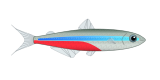
- Neon tetraMoonlight gourami can eat Neon tetra: prey body depth 0.7 cm ≤ mouth 3.8 cm.Avoid
- Harlequin rasboraMoonlight gourami can eat Harlequin rasbora: prey body depth 1.1 cm ≤ mouth 3.8 cm.Avoid
- Fancy guppyMoonlight gourami can eat Fancy guppy: prey body depth 0.8 cm ≤ mouth 3.8 cm.Avoid
- Panda corydorasMoonlight gourami can eat Panda corydoras: prey body depth 2.4 cm ≤ mouth 3.8 cm.Avoid
- OtocinclusMoonlight gourami can eat Otocinclus: prey body depth 0.7 cm ≤ mouth 3.8 cm.Avoid
- Cherry shrimpMoonlight gourami can eat Cherry shrimp: prey body depth 0.8 cm ≤ mouth 3.8 cm.Avoid
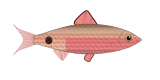
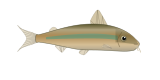
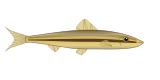
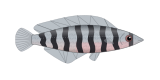
How we check
The numbers the tank model uses for moonlight gouramis: water as ideal and tolerated ranges, bioload from adult mass, space, flow and how they act on other species.
- Standard length
- 15 cm (SL)
- Adult mass
- 93.14 g
- Bioload at 25 °C
- 15.19 BU
- Min. water
- 81 L net
- Min. footprint
- 90 × 30 cm per pair
- Group
- 1+ (best 2)
- Swims in
- top, middle
- Flow
- still
- Body / fins
- labyrinth, normal fins
- Diet type
- omnivore
- Fin nipper
- none
- Sensitive to
- —
Sources: Seriously Fish: Trichopodus microlepis · FishBase: Trichopodus microlepis
Care notes
Moonlight gouramis live in densely vegetated lowland ponds and swamps of Vietnam, Cambodia and Thailand and grow to about 6 inches. Almost all fish in the trade are farm-bred.
A pair needs a 3-foot tank of 20 gallons or more with still water and floating plants. They are shy and dislike noisy tank mates, males can be territorial with other gouramis, and small fish may be eaten.
Questions
What size tank does a moonlight gourami need?
At least 26 gallons (81 litres of water after decor). Adults reach about 5.9 inches without fins.
How many moonlight gouramis should be kept together?
One is fine. They do not need company of their own kind.
What water do moonlight gouramis need?
77–86 °F, pH 6–7.5 and 2–25 dGH. Moonlight gouramis come from Vietnam, Cambodia and Thailand.
How long do moonlight gouramis live?
Not well documented with good care.
What fish can live with moonlight gouramis?
Good tank mates include Angelfish, Blood parrot cichlid, Blue dolphin cichlid, Bristlenose pleco and Clown loach. Each is checked both ways for size, fin nipping, temperament, territory and shared water.