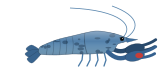
Redclaw crayfish
Cherax quadricarinatus
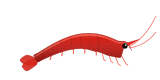
A large blue-green crayfish with red patches on the claws, up to 8 inches; a predator and plant shredder best kept alone under a tight lid.
Key facts
- Body length
- 7.9 in without fins
- Minimum tank
- 47 gallons
- Group
- Alone is fine
- Temperament
- Predatory
- Care level
- 3 / 5
- Lifespan
- Not well documented
- Diet
- Sinking pellets, vegetables, frozen shrimp and fish
- Origin
- Northern Australia and Papua New Guinea
- Hardier than39%
- Bigger than84%
- Calmer than5%
Water: their range vs yours
Redclaw crayfish tank mates
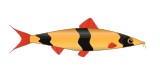
- Clown loachGets along in shared water.Good mates
- Common plecoGets along in shared water.Good mates
- Convict cichlidGets along in shared water.Good mates
- Firemouth cichlidGets along in shared water.Good mates
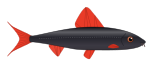
- Iridescent sharkGets along in shared water.Good mates
- Jewel cichlidGets along in shared water.Good mates
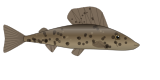
- Leopard sailfin plecoGets along in shared water.Good mates
- Rainbow sharkGets along in shared water.Good mates
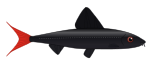
- Red-tailed black sharkGets along in shared water.Good mates
- SeverumGets along in shared water.Good mates
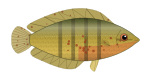
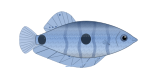
- Three spot gouramiGets along in shared water.Good mates
- Zebra mbunaGets along in shared water.Good mates
- Blue dolphin cichlidTwo territorial bottom-dwellers: need ≥ 5700 cm² of floor, tank has 5612 cm².Risky
- Chinese algae eaterTwo territorial bottom-dwellers: need ≥ 6750 cm² of floor, tank has 5612 cm².Risky
- Golden mbunaRedclaw crayfish can eat young or small Golden mbuna; adults are big enough to be safe.Risky
- KribensisRedclaw crayfish can eat young or small Kribensis; adults are big enough to be safe.Risky
- Kuhli loachRedclaw crayfish can eat young or small Kuhli loach; adults are big enough to be safe.Risky
- OscarOscar eats crayfish: Redclaw crayfish.Risky
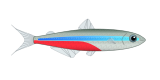
- Neon tetraRedclaw crayfish can eat Neon tetra: prey body depth 0.7 cm ≤ mouth 5.0 cm.Avoid
- Harlequin rasboraRedclaw crayfish can eat Harlequin rasbora: prey body depth 1.1 cm ≤ mouth 5.0 cm.Avoid
- Fancy guppyRedclaw crayfish can eat Fancy guppy: prey body depth 0.8 cm ≤ mouth 5.0 cm.Avoid
- Panda corydorasRedclaw crayfish can eat Panda corydoras: prey body depth 2.4 cm ≤ mouth 5.0 cm.Avoid
- OtocinclusRedclaw crayfish can eat Otocinclus: prey body depth 0.7 cm ≤ mouth 5.0 cm.Avoid
- Cherry shrimpRedclaw crayfish can eat Cherry shrimp: prey body depth 0.8 cm ≤ mouth 5.0 cm.Avoid
How we check
The numbers the tank model uses for redclaw crayfish: water as ideal and tolerated ranges, bioload from adult mass, space, flow and how they act on other species.
- Standard length
- 20 cm (body)
- Adult mass
- 48.00 g
- Bioload at 25 °C
- 15.31 BU
- Min. water
- 150 L net
- Group
- 1+ (best 1)
- Swims in
- bottom
- Flow
- low
- Body / fins
- invertebrate, normal fins
- Diet type
- omnivore
- Fin nipper
- none
- Sensitive to
- copper
Sources: Fishkeeper: Red-clawed crayfish · Wikipedia: List of invasive alien species of Union concern
Care notes
Redclaws come from northern Australia and Papua New Guinea. Females carry the eggs under the tail for 6 to 10 weeks, and the young hatch as tiny crayfish.
One animal needs a 40-gallon tank with a tight lid and caves. It uproots, cuts and eats plants and catches any fish or shrimp it can grab.
Questions
What size tank does a redclaw crayfish need?
At least 47 gallons (150 litres of water after decor). Adults reach about 7.9 inches without fins.
How many redclaw crayfish should be kept together?
One is fine. They do not need company of their own kind.
What water do redclaw crayfish need?
64–82 °F, pH 7.2–8.2 and 10–25 dGH. Redclaw crayfish come from Northern Australia and Papua New Guinea.
How long do redclaw crayfish live?
Not well documented with good care.
What fish can live with redclaw crayfish?
Good tank mates include Clown loach, Common pleco, Convict cichlid, Firemouth cichlid and Iridescent shark. Each is checked both ways for size, fin nipping, temperament, territory and shared water.