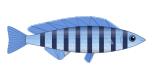
Zebra mbuna
Maylandia zebra
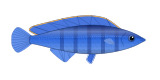
The classic blue-and-black rock cichlid of Lake Malawi; one of the more aggressive mbuna, it needs hard alkaline water, rocks and a crowded mbuna-only tank.
Key facts
- Body length
- 6 in without fins
- Minimum tank
- 64 gallons
- Group
- 4+
- Temperament
- Aggressive
- Care level
- 3 / 5
- Lifespan
- Not well documented
- Diet
- Spirulina pellets and flakes, algae; little or no meat
- Origin
- Rocky shores of Lake Malawi, East Africa
- Hardier than32%
- Bigger than78%
- Calmer than14%
Water: their range vs yours
Zebra mbuna tank mates
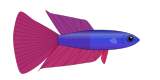
- BettaGets along in shared water.Good mates
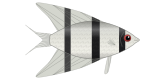
- AngelfishGets along in shared water.Good mates
- Common plecoGets along in shared water.Good mates
- Dwarf gouramiGets along in shared water.Good mates
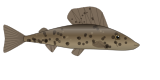
- Leopard sailfin plecoGets along in shared water.Good mates
- SeverumGets along in shared water.Good mates
- Three spot gouramiGets along in shared water.Good mates
- Assassin snailGets along in shared water.Good mates
- Red swamp crayfishGets along in shared water.Good mates
- Redclaw crayfishGets along in shared water.Good mates
- Figure eight pufferGets along in shared water.Good mates
- Kissing gouramiGets along in shared water.Good mates
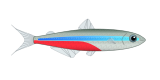
- Neon tetraZebra mbuna attacks fish with a similar shape or colour: Neon tetra.Risky
- Harlequin rasboraZebra mbuna attacks fish with a similar shape or colour: Harlequin rasbora.Risky
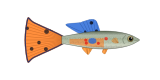
- Fancy guppyZebra mbuna attacks fish with a similar shape or colour: Fancy guppy.Risky
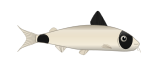
- Panda corydorasZebra mbuna (aggressive) will bully the peaceful Panda corydoras.Risky
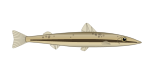
- OtocinclusZebra mbuna (aggressive) will bully the peaceful Otocinclus.Risky
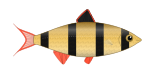
- Tiger barbZebra mbuna attacks fish with a similar shape or colour: Tiger barb.Risky
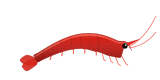
- Cherry shrimpZebra mbuna eats dwarf shrimp: Cherry shrimp (PROP: мбуна поедают мелких беспозвоночных).Avoid
- Amano shrimpZebra mbuna eats dwarf shrimp: Amano shrimp (PROP: мбуна поедают мелких беспозвоночных).Avoid
- Blue dolphin cichlidMbuna are too rough for blue dolphins.Avoid
- Iridescent sharkIridescent shark can eat Zebra mbuna: prey body depth 3.3 cm ≤ mouth 32.5 cm.Avoid
- OscarOscar can eat Zebra mbuna: prey body depth 3.3 cm ≤ mouth 12.3 cm.Avoid
- Peacock cichlidZebras bully peaceful peacock cichlids.Avoid
How we check
The numbers the tank model uses for zebra mbuna: water as ideal and tolerated ranges, bioload from adult mass, space, flow and how they act on other species.
- Standard length
- 15.2 cm (SL)
- Adult mass
- 52.68 g
- Bioload at 25 °C
- 12.41 BU
- Min. water
- 205 L net
- Min. footprint
- 120 × 38 cm per group
- Group
- 4+ (best 12)
- Swims in
- bottom, middle
- Flow
- moderate
- Body / fins
- fusiform, normal fins
- Diet type
- omnivore plant
- Fin nipper
- none
- Sensitive to
- —
Sources: Seriously Fish: Maylandia zebra
Care notes
Zebra mbuna grow to about 6 inches and graze algae among the rocky shores of Lake Malawi. Males are fiercely territorial, so the usual set-up is one male with three females.
Start at 55 gallons with plenty of rocks and caves, pH around 8 and mostly vegetable food, since a meaty diet leads to bloat. Keep them away from peacock cichlids and other calm Malawi fish, which they bully relentlessly.
Questions
What size tank does a zebra mbuna need?
At least 64 gallons (205 litres of water after decor). Adults reach about 6 inches without fins.
How many zebra mbuna should be kept together?
Keep at least 4, ideally 12 or more: fewer feel exposed and hide or turn nippy.
What water do zebra mbuna need?
77–80 °F, pH 8–8.5 and 10–25 dGH. Zebra mbuna come from Rocky shores of Lake Malawi, East Africa.
How long do zebra mbuna live?
Not well documented with good care.
What fish can live with zebra mbuna?
Good tank mates include Betta, Angelfish, Common pleco, Dwarf gourami and Leopard sailfin pleco. Each is checked both ways for size, fin nipping, temperament, territory and shared water.