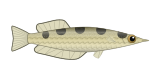
Banded archerfish
Toxotes jaculatrix
The sniper fish that knocks insects down with a jet of water; a 12-inch brackish species that needs a group and air space above the water.
Key facts
- Body length
- 11.8 in without fins
- Minimum tank
- 135 gallons
- Group
- 4+
- Temperament
- Semi-aggressive
- Care level
- 4 / 5
- Lifespan
- Not well documented
- Diet
- Floating pellets, crickets, fruit flies, frozen shrimp
- Origin
- India to the Philippines, New Guinea and northern Australia
- Hardier than10%
- Bigger than92%
- Calmer than28%
Water: their range vs yours
Banded archerfish tank mates
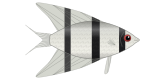
- AngelfishGets along in shared water.Good mates
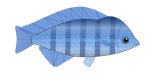
- Blue dolphin cichlidGets along in shared water.Good mates
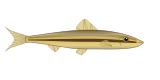
- Chinese algae eaterGets along in shared water.Good mates
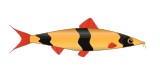
- Clown loachGets along in shared water.Good mates
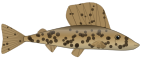
- Common plecoGets along in shared water.Good mates
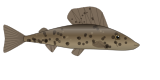
- Leopard sailfin plecoGets along in shared water.Good mates
- OscarGets along in shared water.Good mates
- Peacock cichlidGets along in shared water.Good mates
- SeverumGets along in shared water.Good mates
- Assassin snailGets along in shared water.Good mates
- Bladder snailGets along in shared water.Good mates
- Malaysian trumpet snailGets along in shared water.Good mates
- Blood parrot cichlidBanded archerfish outcompetes the slow-eating Blood parrot cichlid for food; target-feed to make sure it eats.Risky
- Convict cichlidBanded archerfish can eat young or small Convict cichlid; adults are big enough to be safe.Risky
- DiscusBanded archerfish outcompetes the slow-eating Discus for food; target-feed to make sure it eats.Risky
- Jewel cichlidBanded archerfish can eat young or small Jewel cichlid; adults are big enough to be safe.Risky
- Rainbow sharkBanded archerfish can eat young or small Rainbow shark; adults are big enough to be safe.Risky
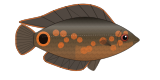
- Three spot gouramiBanded archerfish can eat young or small Three spot gourami; adults are big enough to be safe.Risky
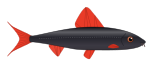
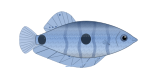
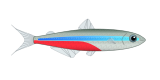
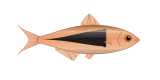
- Neon tetraBanded archerfish can eat Neon tetra: prey body depth 0.7 cm ≤ mouth 7.5 cm.Avoid
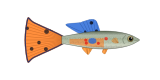
- Harlequin rasboraBanded archerfish can eat Harlequin rasbora: prey body depth 1.1 cm ≤ mouth 7.5 cm.Avoid
- Fancy guppyBanded archerfish can eat Fancy guppy: prey body depth 0.8 cm ≤ mouth 7.5 cm.Avoid
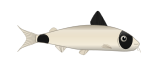
- Panda corydorasBanded archerfish can eat Panda corydoras: prey body depth 2.4 cm ≤ mouth 7.5 cm.Avoid
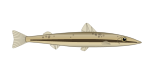
- OtocinclusBanded archerfish can eat Otocinclus: prey body depth 0.7 cm ≤ mouth 7.5 cm.Avoid
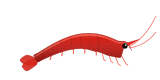
- Cherry shrimpBanded archerfish can eat Cherry shrimp: prey body depth 0.8 cm ≤ mouth 7.5 cm.Avoid

How we check
The numbers the tank model uses for banded archerfish: water as ideal and tolerated ranges, bioload from adult mass, space, flow and how they act on other species.
- Standard length
- 30 cm (SL)
- Adult mass
- 875.39 g
- Bioload at 25 °C
- 87.09 BU
- Min. water
- 432 L net
- Min. footprint
- 120 × 60 cm per group
- Min. height
- 60 cm
- Group
- 4+ (best 5)
- Swims in
- surface, top
- Flow
- low
- Body / fins
- deep bodied, normal fins
- Diet type
- carnivore
- Fin nipper
- none
- Sensitive to
- —
Sources: Seriously Fish: Toxotes jaculatrix · FishBase: Toxotes jaculatrix
Care notes
Banded archerfish live in mangroves, estuaries and overgrown rivers from India to northern Australia. They patrol the surface and shoot insects off overhanging leaves.
A group of four or five, which keeps internal squabbling down, needs a 4-foot tank of 125 gallons, ideally half-filled with land and plants above. Feed floating foods and insects; much smaller fish may be eaten.
Questions
What size tank does a banded archerfish need?
At least 135 gallons (432 litres of water after decor). Adults reach about 11.8 inches without fins.
How many banded archerfish should be kept together?
Keep at least 4, ideally 5 or more: fewer feel exposed and hide or turn nippy.
What water do banded archerfish need?
77–86 °F, pH 7.5–8 and 20–30 dGH. Banded archerfish come from India to the Philippines, New Guinea and northern Australia.
How long do banded archerfish live?
Not well documented with good care.
What fish can live with banded archerfish?
Good tank mates include Angelfish, Blue dolphin cichlid, Chinese algae eater, Clown loach and Common pleco. Each is checked both ways for size, fin nipping, temperament, territory and shared water.