Tiger barb tank mates
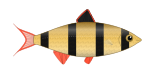
Tiger barb: semi-aggressive, 2.2 in, kept in groups of 6 or more, swims in the middle of the tank and needs about 32 gallons. It may nip fins. The list below checks every species in our catalog against it.
Each species is checked against tiger barbs both ways: mouth size, fin nipping, temperament, territory, water overlap and keeper reports.
Good tank mates
- Fits
Neon tetra
Paracheirodon innesiThe classic community fish: a tight school of electric-blue stripes that suits planted tanks of 15 gallons and up.
1.2 in · 17+ gal · 70–77°F · pH 5–7 - Fits
Black neon tetra
Hyphessobrycon herbertaxelrodiA peaceful tetra with a bright white-over-black stripe; hardier than the neon tetra and an easy fit in any calm community tank.
1.4 in · 23+ gal · 73–81°F · pH 5.5–7.5 - Fits
Black widow tetra
Gymnocorymbus ternetziA hardy, deep-bodied tetra with black 'skirt' fins; easy for beginners, but a small group nips the fins of its tank mates.
2.4 in · 22+ gal · 68–79°F · pH 6–7 - Fits
Bronze cory
Corydoras aeneusThe most widely kept cory: a tough bronze-green or albino catfish that shoals along the bottom and handles a broad range of water.
3 in · 23+ gal · 70–81°F · pH 6–8 - Fits
Cardinal tetra
Paracheirodon axelrodiThe neon's close cousin, with red running the full length of the belly; a soft, acidic-water schooling fish that likes it warmer than neons.
1.4 in · 17+ gal · 73–81°F · pH 4–6 - Fits
Cherry barb
Puntius titteyaOne of the most peaceful barbs: males glow cherry red and leave fins alone, making it great for planted community tanks.
2 in · 17+ gal · 73–81°F · pH 6–8 - Fits
Glowlight tetra
Hemigrammus erythrozonusA small, translucent tetra with a glowing orange stripe along its body; peaceful, hardy and at its best in a densely planted tank.
1.6 in · 22+ gal · 75–82°F · pH 6–7.5 - Fits
Kribensis
Pelvicachromis pulcherA small West African cichlid whose female has a bright belly; a cave-spawning pair digs pits and guards fry along the bottom.
3.9 in · 23+ gal · 75–81°F · pH 6.5–7 - Fits
Molly
Poecilia sphenopsA sturdy livebearer that needs hard water and plenty of plant food, and does well in slightly brackish conditions.
3.1 in · 26+ gal · 70–82°F · pH 7–8.5 - Fits
Multies
Neolamprologus multifasciatusThe smallest Tanganyika cichlid, about 2 inches, living in empty snail shells; a colony carves the sand into tiny fiercely guarded plots.
1.8 in · 13+ gal · 77–80°F · pH 8–8.5 - Fits
Peppered cory
Corydoras paleatusOne of the hardiest corys: a mottled catfish that sifts sand in a group of six and prefers slightly cooler water.
2.8 in · 22+ gal · 72–79°F · pH 6–7 - Fits
Platy
Xiphophorus maculatusOne of the easiest livebearers for beginners: peaceful, colourful and undemanding, happiest in moderately hard water with plants.
2.4 in · 17+ gal · 68–79°F · pH 7–8.2 - Fits
Ram cichlid
Mikrogeophagus ramireziA brilliantly coloured dwarf cichlid from the Orinoco llanos that needs warm, very clean water and calm tank mates.
1.6 in · 17+ gal · 81–86°F · pH 4–7 - Fits
Rosy barb
Pethia conchoniusA large, hardy barb whose males turn bright pink-red when breeding; suits cooler tanks that run without a heater.
3.9 in · 28+ gal · 64–72°F · pH 6–8 - Fits
Rummy-nose tetra
Hemigrammus bleheriA tight-schooling tetra with a bright red nose and striped tail whose colour fades when water quality slips, making it a living warning light.
2 in · 26+ gal · 73–79°F · pH 5.5–6 - Fits
Serpae tetra
Hyphessobrycon equesA bright red, hardy tetra with a notorious fin-nipping habit; needs a big group and no slow, long-finned tank mates.
1.6 in · 23+ gal · 72–79°F · pH 5–7.5 - Fits
Siamese algae eater
Crossocheilus oblongusA slim silver fish with a black stripe and one of the few that eats black beard algae; grows to about 6 inches and loves to jump.
5.9 in · 95+ gal · 75–79°F · pH 6.5–8 - Fits
Swordtail
Xiphophorus helleriiA large, very active livebearer whose males carry a sword-shaped tail; it needs a long tank, a lid and hard water.
6.3 in · 34+ gal · 72–82°F · pH 7–8 - Fits
White Cloud Mountain minnow
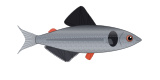
Tanichthys albonubesA small, hardy minnow with red fins that needs no heater; ideal for an unheated tank kept at room temperature.
1.6 in · 17+ gal · 64–72°F · pH 6–8 - Fits
Zebra danio
Danio rerioA fast, striped danio and one of the hardiest beginner fish; schools near the surface and is happy at room temperature.
1.5 in · 26+ gal · 64–75°F · pH 6–8 - Fits
Agassiz's dwarf cichlid
Apistogramma agassiziiAn Amazon dwarf cichlid whose males carry a lyre-shaped tail; prefers soft, acidic water and breeds in caves.
3 in · 17+ gal · 72–84°F · pH 5–6.5 - Fits
Black phantom tetra
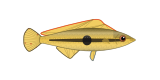
Hyphessobrycon megalopterusA calm, deep-bodied tetra with a black shoulder patch; males with tall dorsal fins put on harmless sparring displays.
1.4 in · 23+ gal · 72–82°F · pH 6–7 - Fits
Boeseman's rainbowfish
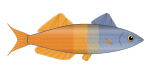
Melanotaenia boesemaniA two-tone rainbowfish, blue-violet in front and orange behind; needs warm, hard, alkaline water and a long tank.
3.5 in · 34+ gal · 81–86°F · pH 7–8 - Fits
Celestial pearl danio
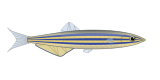
Danio margaritatusA tiny, pearl-spotted danio with orange fins, the star of planted nano tanks; shy, with males sparring constantly.
0.8 in · 13+ gal · 72–75°F · pH 6.5–7.5
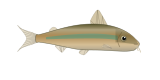
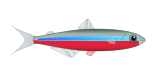
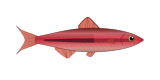
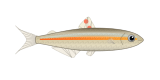
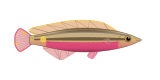
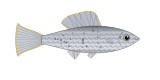
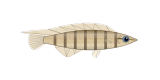
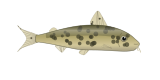
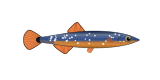
And 28 more in the species catalog.
Risky
- With care
Harlequin rasbora
Trigonostigma heteromorphaBarbs may harass rasboras.
1.4 in · 17+ gal · 73–81°F · pH 6–7 - With care
Panda corydoras
Corydoras pandaUsually fine; watch for fin nipping.
1.6 in · 17+ gal · 72–77°F · pH 6–7.2 - With care
Otocinclus
Otocinclus vittatusTiger barb nips fins; Otocinclus is vulnerable (slow swimmer). Risk is reduced: the group is at least the recommended size.
1.4 in · 17+ gal · 72–79°F · pH 6–7.2 - With care
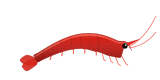
Cherry shrimp
Neocaridina davidiTiger barb eats dwarf shrimp: Cherry shrimp.
1.6 in · 4+ gal · 72–75°F · pH 6.5–7.8 - With care
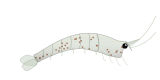
Amano shrimp
Caridina multidentataTiger barb eats dwarf shrimp: Amano shrimp.
2 in · 7+ gal · 72–77°F · pH 6.5–7.5 - With care
Blood parrot cichlid
hybridTiger barb nips fins; Blood parrot cichlid is vulnerable (slow swimmer). Risk is reduced: the group is at least the recommended size.
7.9 in · 36+ gal · 72–82°F · pH 6.5–8 - With care
Bristlenose pleco
Ancistrus cf. cirrhosusTiger barb nips fins; Bristlenose pleco is vulnerable (slow swimmer). Risk is reduced: the group is at least the recommended size.
4.9 in · 17+ gal · 70–79°F · pH 5.5–7.5 - With care
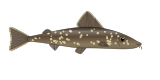
Chinese algae eater
Gyrinocheilus aymonieriChinese algae eater attacks fish with a similar shape or colour: Tiger barb.
11 in · 95+ gal · 72–79°F · pH 6–8 - With care
Clown loach
Chromobotia macracanthusClown loach attacks fish with a similar shape or colour: Tiger barb.
15.7 in · 202+ gal · 75–86°F · pH 5–7 - With care
Common pleco
Pterygoplichthys pardalisTiger barb nips fins; Amazon sailfin catfish (common pleco) is vulnerable (slow swimmer). Risk is reduced: the group is at least the recommended size.
22.8 in · 203+ gal · 77–82°F · pH 7–7.5 - With care
Demasoni
Chindongo demasoni (syn. Pseudotropheus demasoni)Demasoni attacks fish with a similar shape or colour: Tiger barb.
3 in · 64+ gal · 75–82°F · pH 8.2–8.5 - With care
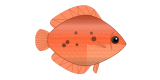
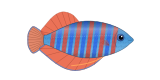
Dwarf gourami
Trichogaster laliusTiger barb nips fins; Dwarf gourami is vulnerable (slow swimmer). Risk is reduced: the group is at least the recommended size.
3 in · 18+ gal · 72–81°F · pH 6–7.5
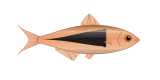
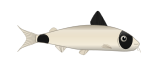
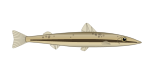
And 39 more in the species catalog.
Avoid
- Avoid
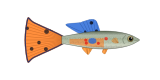
Fancy guppy
Poecilia reticulataTiger barbs shred guppy tails.
1.4 in · 13+ gal · 75–81°F · pH 7–8 - Avoid
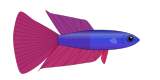
Betta
Betta splendensTiger barbs nip betta fins.
2.8 in · 11+ gal · 72–86°F · pH 6–7.5 - Avoid
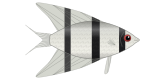
Angelfish
Pterophyllum scalareTiger barbs shred angelfish fins.
3.5 in · 32+ gal · 77–84°F · pH 6–7 - Avoid
Blue dolphin cichlid
Cyrtocara mooriiBlue dolphin cichlid can eat Tiger barb: prey body depth 2.5 cm ≤ mouth 6.3 cm.
9.8 in · 80+ gal · 77–81°F · pH 8–8.5 - Avoid
Convict cichlid
Amatitlania nigrofasciataConvict cichlid can eat Tiger barb: prey body depth 2.5 cm ≤ mouth 3.8 cm.
5.9 in · 34+ gal · 75–82°F · pH 7–8 - Avoid
Discus
Symphysodon aequifasciatus (species complex)Tiger barbs harass slow discus.
5.5 in · 80+ gal · 79–86°F · pH 5–7 - Avoid
Goldfish
Carassius auratusTiger barbs shred goldfish fins.
5.9 in · 24+ gal · 50–75°F · pH 6.5–8 - Avoid
Iridescent shark
Pangasianodon hypophthalmusIridescent shark can eat Tiger barb: prey body depth 2.5 cm ≤ mouth 32.5 cm.
51.2 in · 4532+ gal · 72–79°F · pH 6.5–7.5 - Avoid
Jewel cichlid
Rubricatochromis bimaculatus (syn. Hemichromis bimaculatus)Jewel cichlid can eat Tiger barb: prey body depth 2.5 cm ≤ mouth 3.8 cm.
5.9 in · 34+ gal · 72–82°F · pH 6–7.8 - Avoid
Oscar
Astronotus ocellatusOscar can eat Tiger barb: prey body depth 2.5 cm ≤ mouth 12.3 cm.
13.8 in · 168+ gal · 72–77°F · pH 6–7.5 - Avoid
Severum
Heros severus / Heros efasciatusSeverum can eat Tiger barb: prey body depth 2.5 cm ≤ mouth 5.0 cm.
7.9 in · 76+ gal · 72–84°F · pH 5.5–6.5 - Avoid
Three spot gourami
Trichopodus trichopterusThree spot gourami can eat Tiger barb: prey body depth 2.5 cm ≤ mouth 3.8 cm.
5.9 in · 26+ gal · 75–86°F · pH 6–8
And 34 more in the species catalog.
Every tank is different. Set yours up once (size, water, who already lives there) and each species is checked against it.
Plan my tank