Best fish for a 20 gallon tank
A 20 gallon long (76 cm) is the classic first community tank: room for a school of small tetras or rasboras, a group of corydoras and an algae crew.
Checked by our tank model as a starter group in an empty, cycled 20G Long (76 × 30 × 30 cm) with a filter rated for it. One group per tank; mix species with the planner.
Good fits
- Fits
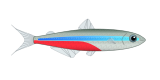
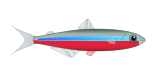
Neon tetra
Paracheirodon innesipH 7.2 works for Neon tetra, but 5.0–7.0 is ideal.
group of 8 · 1.2 in · 17+ gal · 70–77°F · pH 5–7 - Fits
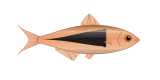
Harlequin rasbora
Trigonostigma heteromorphapH 7.2 works for Harlequin rasbora, but 6.0–7.0 is ideal.
group of 8 · 1.4 in · 17+ gal · 73–81°F · pH 6–7 - Fits
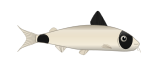
Panda corydoras
Corydoras pandaFriendly armoured catfish that sift the sand in groups; need soft substrate and a group of six or more.
group of 6 · 1.6 in · 17+ gal · 72–77°F · pH 6–7.2 - Fits
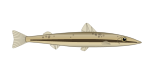
Otocinclus
Otocinclus vittatusTiny algae grazers for mature planted tanks; keep six or more and supplement with vegetables.
group of 6 · 1.4 in · 17+ gal · 72–79°F · pH 6–7.2 - Fits
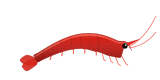
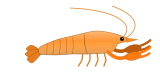
Cherry shrimp
Neocaridina davidiTemperature 76°F works for Cherry shrimp, but 72–75°F is ideal.
group of 10 · 1.6 in · 4+ gal · 72–75°F · pH 6.5–7.8 - Fits
Amano shrimp
Caridina multidentataThe best-known algae-eating shrimp, made famous by Takashi Amano; bigger than cherries and a good fit for planted community tanks.
group of 3 · 2 in · 7+ gal · 72–77°F · pH 6.5–7.5 - Fits
Bristlenose pleco
Ancistrus cf. cirrhosusThe go-to glass cleaner: a compact 5-inch pleco with bushy whiskers on the males that needs a cave and vegetables, not just algae.
4.9 in · 17+ gal · 70–79°F · pH 5.5–7.5 - Fits
Cardinal tetra
Paracheirodon axelrodipH 7.2 works for Cardinal tetra, but 4.0–6.0 is ideal.
group of 8 · 1.4 in · 17+ gal · 73–81°F · pH 4–6 - Fits
Cherry barb
Puntius titteyaOne of the most peaceful barbs: males glow cherry red and leave fins alone, making it great for planted community tanks.
group of 6 · 2 in · 17+ gal · 73–81°F · pH 6–8 - Fits
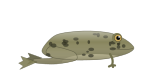
African dwarf frog
Hymenochirus boettgeriA small, fully aquatic frog of up to 2 inches that can share a tank with peaceful fish, as long as it is target-fed.
group of 2 · 2 in · 7+ gal · 75–77°F · pH 6.6–7.8 - Fits
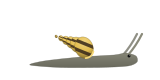
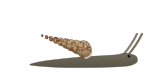
Assassin snail
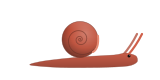
Anentome helenaA yellow-and-brown striped predatory snail kept to control bladder, ramshorn and trumpet snails; it breeds slowly and never becomes a pest.
1 in · 3+ gal · 70–81°F · pH 7.2–8 - Fits
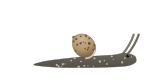
Bladder snail
Physella acutaBladder snail breeds out of control when overfed.
0.6 in · 1+ gal · 63–84°F · pH 7–8 - Fits
Dwarf orange crayfish
Cambarellus patzcuarensisA bright orange crayfish of about 1.5 inches and the only popular crayfish that fits a planted tank with peaceful fish.
group of 2 · 1.6 in · 10+ gal · 64–79°F · pH 6.8–8 - Fits
Malaysian trumpet snail
Melanoides tuberculataMalaysian trumpet snail breeds out of control when overfed.
1 in · 2+ gal · 64–77°F · pH 7–8.5 - Fits
Marbled crayfish
Procambarus virginalisThe only known clonal crayfish: every one is female and breeds without males, so a single animal can found a colony of hundreds.
3.9 in · 19+ gal · 64–77°F · pH 7–8 - Fits
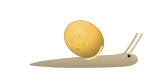
Mystery snail
Pomacea diffusaThe most popular large aquarium snail; it leaves healthy plants alone and lays its eggs above the waterline, so numbers are easy to control.
2.2 in · 7+ gal · 68–82°F · pH 7–8 - Fits
Ramshorn snail
Planorbarius corneusThe classic flat-coiled snail every fishkeeper knows; it cleans up film and leftovers, breeds easily, and the red form is especially popular.
1.4 in · 4+ gal · 70–81°F · pH 7–8 - Fits
Celestial pearl danio
Danio margaritatusTemperature 76°F works for Celestial pearl danio, but 72–75°F is ideal.
group of 10 · 0.8 in · 13+ gal · 72–75°F · pH 6.5–7.5 - Fits
Figure eight puffer
Dichotomyctere ocellatusA small puffer with a figure-eight pattern for fresh or slightly brackish water; it loves snails and nips slow tank mates.
3.1 in · 22+ gal · 72–79°F · pH 6.5–7.5 - Fits
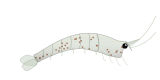
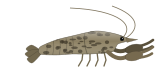
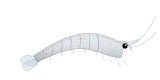
Ghost shrimp
Palaemonetes paludosusA cheap, see-through North American shrimp whose insides are visible; easy to keep, but short-lived and often hard on fry and shrimplets.
group of 3 · 1.9 in · 7+ gal · 64–82°F · pH 7–8 - Fits
Neon dwarf rainbowfish
Melanotaenia praecoxA small rainbowfish with shimmering blue scales and red fins on the males; shy, schooling and in need of open swimming space.
group of 6 · 2 in · 17+ gal · 73–82°F · pH 6.8–7.5 - Fits
Pea puffer
Carinotetraodon travancoricusThe smallest freshwater puffer, an inch of curiosity and attitude; it eats snails, nips fins and rarely suits a community tank.
1 in · 5+ gal · 72–82°F · pH 6.8–8 - Fits
Pygmy cory
Corydoras pygmaeusThe smallest cory at about an inch, schooling in open water as much as on the bottom; a natural fit for nano tanks with shrimp.
group of 6 · 1.2 in · 13+ gal · 72–79°F · pH 6.4–7.4 - Fits
Sterba's cory
Corydoras sterbaiA spotted cory with bright orange pectoral fins that takes warmer water than most, making it a classic discus-tank companion.
group of 6 · 2.6 in · 13+ gal · 75–82°F · pH 6–7.6
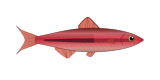
And 8 more in the species catalog.
Possible, with care
- With care
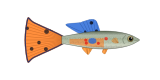
Fancy guppy
Poecilia reticulataGH 8 dGH is outside the Fancy guppy range 8–25 dGH.
group of 3 · 1.4 in · 13+ gal · 75–81°F · pH 7–8 - With care
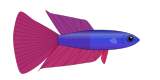
Betta
Betta splendensBetta: turnover 4.6/h is above the comfortable 3/h.
2.8 in · 11+ gal · 72–86°F · pH 6–7.5 - With care
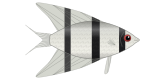
Angelfish
Pterophyllum scalareAngelfish: needs a 100 L tank, this one is 68 L.
3.5 in · 32+ gal · 77–84°F · pH 6–7 - With care
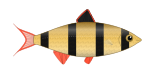
Tiger barb
Puntigrus tetrazonaTiger barb: needs a 100 L tank, this one is 68 L.
group of 6 · 2.2 in · 32+ gal · 72–79°F · pH 6–7.5 - With care
Black neon tetra
Hyphessobrycon herbertaxelrodiBlack neon tetra: needs a 72 L tank, this one is 68 L.
group of 8 · 1.4 in · 23+ gal · 73–81°F · pH 5.5–7.5 - With care
Blood parrot cichlid
hybridBlood parrot cichlid: needs a 114 L tank, this one is 68 L.
7.9 in · 36+ gal · 72–82°F · pH 6.5–8 - With care
Dwarf gourami
Trichogaster laliusDwarf gourami: turnover 4.6/h is above the comfortable 3/h.
3 in · 18+ gal · 72–81°F · pH 6–7.5 - With care
Firemouth cichlid
Thorichthys meekiFiremouth cichlid: needs a 108 L tank, this one is 68 L.
group of 2 · 4.7 in · 34+ gal · 75–82°F · pH 6.5–8.5 - With care
Glowlight tetra
Hemigrammus erythrozonusGlowlight tetra: tank width 30 cm < 38 cm needed.
group of 6 · 1.6 in · 22+ gal · 75–82°F · pH 6–7.5 - With care
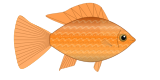
Goldfish
Carassius auratusGoldfish: needs a 76 L tank, this one is 68 L.
group of 2 · 5.9 in · 24+ gal · 50–75°F · pH 6.5–8 - With care
Honey gourami
Trichogaster chunaHoney gourami: turnover 4.6/h is above the comfortable 3/h.
group of 4 · 2.2 in · 17+ gal · 72–81°F · pH 6–7.5 - With care
Jewel cichlid
Rubricatochromis bimaculatus (syn. Hemichromis bimaculatus)Jewel cichlid: needs a 108 L tank, this one is 68 L.
group of 2 · 5.9 in · 34+ gal · 72–82°F · pH 6–7.8
And 30 more in the species catalog.
Too much
- Avoid
Black widow tetra
Gymnocorymbus ternetzipH 7.2 is outside the Black widow tetra range 6.0–7.0.
group of 12 · 2.4 in · 22+ gal · 68–79°F · pH 6–7 - Avoid
Blue dolphin cichlid
Cyrtocara mooriiTemperature 76°F is outside the Blue dolphin cichlid range 77–84°F.
group of 3 · 9.8 in · 80+ gal · 77–81°F · pH 8–8.5 - Avoid
Bronze cory
Corydoras aeneusStocking of 198% is above the 150% limit.
group of 6 · 3 in · 23+ gal · 70–81°F · pH 6–8 - Avoid
Chinese algae eater
Gyrinocheilus aymonieriChinese algae eater: needs a 304 L tank, this one is 68 L.
group of 6 · 11 in · 95+ gal · 72–79°F · pH 6–8 - Avoid
Clown loach
Chromobotia macracanthuspH 7.2 is outside the Clown loach range 5.0–7.0.
group of 6 · 15.7 in · 202+ gal · 75–86°F · pH 5–7 - Avoid
Common pleco
Pterygoplichthys pardalisAmazon sailfin catfish (common pleco): needs a 650 L tank, this one is 68 L.
22.8 in · 203+ gal · 77–82°F · pH 7–7.5 - Avoid
Convict cichlid
Amatitlania nigrofasciataStocking of 151% is above the 150% limit.
group of 2 · 5.9 in · 34+ gal · 75–82°F · pH 7–8 - Avoid
Demasoni
Chindongo demasoni (syn. Pseudotropheus demasoni)pH 7.2 is outside the Demasoni range 7.6–8.8.
group of 6 · 3 in · 64+ gal · 75–82°F · pH 8.2–8.5 - Avoid
Discus
Symphysodon aequifasciatus (species complex)Temperature 76°F is outside the Discus range 79–86°F.
group of 5 · 5.5 in · 80+ gal · 79–86°F · pH 5–7 - Avoid
Fairy cichlid
Neolamprologus brichardipH 7.2 is outside the Fairy cichlid range 8.0–9.0.
group of 2 · 3.5 in · 34+ gal · 73–79°F · pH 8–9 - Avoid
Golden mbuna
Melanochromis auratuspH 7.2 is outside the Golden mbuna range 7.6–8.8.
group of 4 · 4.3 in · 64+ gal · 75–82°F · pH 7.6–8.8 - Avoid
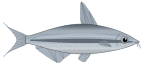
Iridescent shark
Pangasianodon hypophthalmusIridescent shark: needs a 14580 L tank, this one is 68 L.
51.2 in · 4532+ gal · 72–79°F · pH 6.5–7.5
And 64 more in the species catalog.
How many fish fit in 20 gallons?
The old inch-per-gallon rule ignores body shape and group size. We estimate bioload from adult mass and water temperature, compare it with what the filter and weekly water changes remove, then add the space each species needs to swim and school.
The list above checks one species at a time. To mix several, add them to your own tank: the planner checks every pair and the combined load.
Questions
How many fish can go in a 20 gallon tank?
Roughly one school of 10 small fish, 6 corydoras and a few otocinclus or shrimp, if the filter is rated for the tank and you change 30% of the water weekly.
Every tank is different. Set yours up once (size, water, who already lives there) and each species is checked against it.
Plan my tank