Cherry shrimp tank mates
Cherry shrimp are tiny and their babies even smaller, so almost any fish with a mouth will eat shrimplets. The safest company is small, peaceful and plant-grazing.
Each species is checked against cherry shrimp both ways: mouth size, fin nipping, temperament, territory, water overlap and keeper reports.
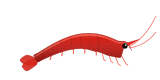
Good tank mates
- Fits
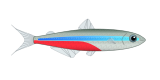
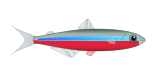
Neon tetra
Paracheirodon innesiThe classic community fish: a tight school of electric-blue stripes that suits planted tanks of 15 gallons and up.
1.2 in · 17+ gal · 70–77°F · pH 5–7 - Fits
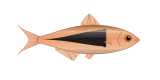
Harlequin rasbora
Trigonostigma heteromorphaCopper-orange schooling fish with a black wedge; hardy, calm and a good first school for a 15–20 gallon tank.
1.4 in · 17+ gal · 73–81°F · pH 6–7 - Fits
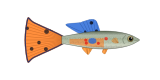
Fancy guppy
Poecilia reticulataColourful livebearers with flowing tails; prefer harder water and breed readily, so plan for fry.
1.4 in · 13+ gal · 75–81°F · pH 7–8 - Fits
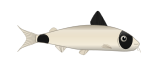
Panda corydoras
Corydoras pandaFriendly armoured catfish that sift the sand in groups; need soft substrate and a group of six or more.
1.6 in · 17+ gal · 72–77°F · pH 6–7.2 - Fits
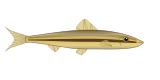
Otocinclus
Otocinclus vittatusTiny algae grazers for mature planted tanks; keep six or more and supplement with vegetables.
1.4 in · 17+ gal · 72–79°F · pH 6–7.2 - Fits
Amano shrimp
Caridina multidentataThe best-known algae-eating shrimp, made famous by Takashi Amano; bigger than cherries and a good fit for planted community tanks.
2 in · 7+ gal · 72–77°F · pH 6.5–7.5 - Fits
Black neon tetra
Hyphessobrycon herbertaxelrodiA peaceful tetra with a bright white-over-black stripe; hardier than the neon tetra and an easy fit in any calm community tank.
1.4 in · 23+ gal · 73–81°F · pH 5.5–7.5 - Fits
Black widow tetra
Gymnocorymbus ternetziA hardy, deep-bodied tetra with black 'skirt' fins; easy for beginners, but a small group nips the fins of its tank mates.
2.4 in · 22+ gal · 68–79°F · pH 6–7 - Fits
Blood parrot cichlid
hybridA man-made hybrid cichlid with a round body and a beak-like mouth that barely closes; usually gentle and rarely able to swallow tank mates.
7.9 in · 36+ gal · 72–82°F · pH 6.5–8 - Fits
Bristlenose pleco
Ancistrus cf. cirrhosusThe go-to glass cleaner: a compact 5-inch pleco with bushy whiskers on the males that needs a cave and vegetables, not just algae.
4.9 in · 17+ gal · 70–79°F · pH 5.5–7.5 - Fits
Bronze cory
Corydoras aeneusThe most widely kept cory: a tough bronze-green or albino catfish that shoals along the bottom and handles a broad range of water.
3 in · 23+ gal · 70–81°F · pH 6–8 - Fits
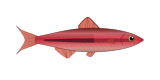
Cardinal tetra
Paracheirodon axelrodiThe neon's close cousin, with red running the full length of the belly; a soft, acidic-water schooling fish that likes it warmer than neons.
1.4 in · 17+ gal · 73–81°F · pH 4–6 - Fits
Cherry barb
Puntius titteyaOne of the most peaceful barbs: males glow cherry red and leave fins alone, making it great for planted community tanks.
2 in · 17+ gal · 73–81°F · pH 6–8 - Fits
Chinese algae eater
Gyrinocheilus aymonieriA popular sucker-mouth 'cleaner' that reaches 11 inches and turns aggressive with age, sometimes rasping the slime coat off other fish.
11 in · 95+ gal · 72–79°F · pH 6–8 - Fits
Common pleco
Pterygoplichthys pardalisThe classic store 'algae eater' that grows to nearly two feet, fouls the water and eats less algae with age; a fish for very large tanks only.
22.8 in · 203+ gal · 77–82°F · pH 7–7.5 - Fits
Discus
Symphysodon aequifasciatus (species complex)The 'king of the aquarium': a disc-shaped Amazon cichlid in countless bred colours that needs warm, soft, very clean water.
5.5 in · 80+ gal · 79–86°F · pH 5–7 - Fits
Dwarf gourami
Trichogaster laliusA bright little gourami popular with beginners; one male per tank, no bettas, and buy carefully, as imported fish often carry an incurable iridovirus.
3 in · 18+ gal · 72–81°F · pH 6–7.5 - Fits
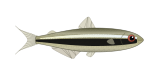
Glowlight tetra
Hemigrammus erythrozonusA small, translucent tetra with a glowing orange stripe along its body; peaceful, hardy and at its best in a densely planted tank.
1.6 in · 22+ gal · 75–82°F · pH 6–7.5 - Fits
Honey gourami
Trichogaster chunaA small, very gentle honey-coloured gourami for calm tanks of 15 gallons with peaceful tank mates.
2.2 in · 17+ gal · 72–81°F · pH 6–7.5 - Fits
Kuhli loach
Pangio semicinctaA banded, eel-like loach of about 4 inches that burrows by day and explores the bottom as a group in the evening; needs soft sand.
3.9 in · 17+ gal · 70–79°F · pH 3.5–7 - Fits
Leopard sailfin pleco
Pterygoplichthys gibbicepsA tall-finned pleco with a brocade pattern that is sold at 2 inches and grows to about 20, needing a very large tank and heavy filtration.
19.7 in · 187+ gal · 77–86°F · pH 5–7 - Fits
Molly
Poecilia sphenopsA sturdy livebearer that needs hard water and plenty of plant food, and does well in slightly brackish conditions.
3.1 in · 26+ gal · 70–82°F · pH 7–8.5 - Fits
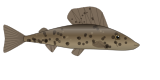
Peppered cory
Corydoras paleatusOne of the hardiest corys: a mottled catfish that sifts sand in a group of six and prefers slightly cooler water.
2.8 in · 22+ gal · 72–79°F · pH 6–7 - Fits
Platy
Xiphophorus maculatusOne of the easiest livebearers for beginners: peaceful, colourful and undemanding, happiest in moderately hard water with plants.
2.4 in · 17+ gal · 68–79°F · pH 7–8.2
And 51 more in the species catalog.
Risky
- With care
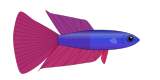
Betta
Betta splendensBetta eats dwarf shrimp: Cherry shrimp (some individuals hunt them).
2.8 in · 11+ gal · 72–86°F · pH 6–7.5 - With care
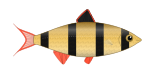
Tiger barb
Puntigrus tetrazonaTiger barb eats dwarf shrimp: Cherry shrimp.
2.2 in · 32+ gal · 72–79°F · pH 6–7.5 - With care
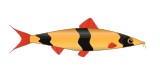
Clown loach
Chromobotia macracanthusClown loach eats dwarf shrimp: Cherry shrimp (PROP: в SF не упомянуто).
15.7 in · 202+ gal · 75–86°F · pH 5–7 - With care
Fairy cichlid
Neolamprologus brichardiFairy cichlid (Brichardi) eats dwarf shrimp: Cherry shrimp (PROP).
3.5 in · 34+ gal · 73–79°F · pH 8–9 - With care
Kribensis
Pelvicachromis pulcherShrimplets get eaten.
3.9 in · 23+ gal · 75–81°F · pH 6.5–7 - With care
Multies
Neolamprologus multifasciatusShrimplets get eaten.
1.8 in · 13+ gal · 77–80°F · pH 8–8.5 - With care
Pearl gourami
Trichopodus leeriiPearl gourami eats dwarf shrimp: Cherry shrimp (PROP: индивидуально).
4.7 in · 26+ gal · 75–86°F · pH 5.5–8 - With care
Rainbow shark
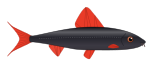
Epalzeorhynchos frenatumRainbow shark (aggressive) will bully the peaceful Cherry shrimp.
5.9 in · 76+ gal · 75–79°F · pH 6.5–8 - With care
Red-tailed black shark
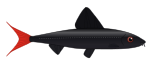
Epalzeorhynchos bicolorRed-tailed black shark (aggressive) will bully the peaceful Cherry shrimp.
4.9 in · 76+ gal · 72–79°F · pH 6.5–7.5 - With care
Rosy barb
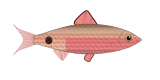
Pethia conchoniusRosy barb eats dwarf shrimp: Cherry shrimp (PROP: крупный активный всеядный карповый).
3.9 in · 28+ gal · 64–72°F · pH 6–8 - With care
Serpae tetra
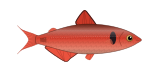
Hyphessobrycon equesSerpae tetra nips fins; Cherry shrimp is vulnerable (slow swimmer). Risk is reduced: the group is at least the recommended size.
1.6 in · 23+ gal · 72–79°F · pH 5–7.5 - With care
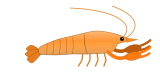
Dwarf orange crayfish
Cambarellus patzcuarensisDwarf crayfish eat shrimplets.
1.6 in · 10+ gal · 64–79°F · pH 6.8–8
And 12 more in the species catalog.
Avoid
- Avoid
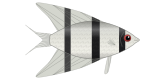
Angelfish
Pterophyllum scalareAngelfish can eat Cherry shrimp: prey body depth 0.8 cm ≤ mouth 2.3 cm.
3.5 in · 32+ gal · 77–84°F · pH 6–7 - Avoid
Blue dolphin cichlid
Cyrtocara mooriiBlue dolphin cichlid can eat Cherry shrimp: prey body depth 0.8 cm ≤ mouth 6.3 cm.
9.8 in · 80+ gal · 77–81°F · pH 8–8.5 - Avoid
Convict cichlid
Amatitlania nigrofasciataConvict cichlid can eat Cherry shrimp: prey body depth 0.8 cm ≤ mouth 3.8 cm.
5.9 in · 34+ gal · 75–82°F · pH 7–8 - Avoid
Demasoni
Chindongo demasoni (syn. Pseudotropheus demasoni)Demasoni eats dwarf shrimp: Cherry shrimp (PROP: мбуна поедают мелких беспозвоночных).
3 in · 64+ gal · 75–82°F · pH 8.2–8.5 - Avoid
Firemouth cichlid
Thorichthys meekiFiremouth cichlid can eat Cherry shrimp: prey body depth 0.8 cm ≤ mouth 3.0 cm.
4.7 in · 34+ gal · 75–82°F · pH 6.5–8.5 - Avoid
Golden mbuna
Melanochromis auratusGolden mbuna eats dwarf shrimp: Cherry shrimp (PROP: мбуна поедают мелких беспозвоночных).
4.3 in · 64+ gal · 75–82°F · pH 7.6–8.8 - Avoid
Goldfish
Carassius auratusGoldfish can eat Cherry shrimp: prey body depth 0.8 cm ≤ mouth 3.0 cm.
5.9 in · 24+ gal · 50–75°F · pH 6.5–8 - Avoid
Iridescent shark
Pangasianodon hypophthalmusIridescent shark can eat Cherry shrimp: prey body depth 0.8 cm ≤ mouth 32.5 cm.
51.2 in · 4532+ gal · 72–79°F · pH 6.5–7.5 - Avoid
Jewel cichlid
Rubricatochromis bimaculatus (syn. Hemichromis bimaculatus)Jewel cichlid can eat Cherry shrimp: prey body depth 0.8 cm ≤ mouth 3.8 cm.
5.9 in · 34+ gal · 72–82°F · pH 6–7.8 - Avoid
Oscar
Astronotus ocellatusOscar can eat Cherry shrimp: prey body depth 0.8 cm ≤ mouth 12.3 cm.
13.8 in · 168+ gal · 72–77°F · pH 6–7.5 - Avoid
Peacock cichlid
Aulonocara jacobfreibergiMalawi butterfly peacock eats dwarf shrimp: Cherry shrimp (PROP: охотится на беспозвоночных в песке).
6.7 in · 135+ gal · 77–84°F · pH 7.5–9 - Avoid
Severum
Heros severus / Heros efasciatusSeverum can eat Cherry shrimp: prey body depth 0.8 cm ≤ mouth 5.0 cm.
7.9 in · 76+ gal · 72–84°F · pH 5.5–6.5
And 38 more in the species catalog.
Questions
What fish will not eat cherry shrimp?
Otocinclus and small plecos leave them alone. Small rasboras and tetras may take babies but rarely adults.
Every tank is different. Set yours up once (size, water, who already lives there) and each species is checked against it.
Plan my tank