Red-tailed black shark tank mates
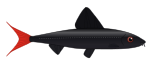
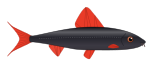
Red-tailed black shark: aggressive, 4.9 in, fine on its own, swims in the bottom and middle of the tank and needs about 76 gallons. The list below checks every species in our catalog against it.
Each species is checked against red-tailed black sharks both ways: mouth size, fin nipping, temperament, territory, water overlap and keeper reports.
Good tank mates
- Fits
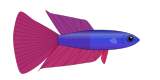
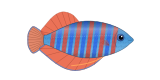
Betta
Betta splendensThe Siamese fighting fish: one male per tank, warm still water, and no long-finned or nippy tank mates.
2.8 in · 11+ gal · 72–86°F · pH 6–7.5 - Fits
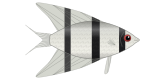
Angelfish
Pterophyllum scalareTall, graceful cichlids for tall tanks of 30 gallons and up; adults eat neon tetras and shrimp, so stock around them.
3.5 in · 32+ gal · 77–84°F · pH 6–7 - Fits
Blood parrot cichlid
hybridA man-made hybrid cichlid with a round body and a beak-like mouth that barely closes; usually gentle and rarely able to swallow tank mates.
7.9 in · 36+ gal · 72–82°F · pH 6.5–8 - Fits
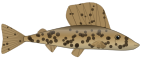
Common pleco
Pterygoplichthys pardalisThe classic store 'algae eater' that grows to nearly two feet, fouls the water and eats less algae with age; a fish for very large tanks only.
22.8 in · 203+ gal · 77–82°F · pH 7–7.5 - Fits
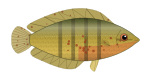
Dwarf gourami
Trichogaster laliusA bright little gourami popular with beginners; one male per tank, no bettas, and buy carefully, as imported fish often carry an incurable iridovirus.
3 in · 18+ gal · 72–81°F · pH 6–7.5 - Fits
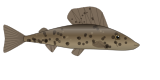
Leopard sailfin pleco
Pterygoplichthys gibbicepsA tall-finned pleco with a brocade pattern that is sold at 2 inches and grows to about 20, needing a very large tank and heavy filtration.
19.7 in · 187+ gal · 77–86°F · pH 5–7 - Fits
Severum
Heros severus / Heros efasciatusA calm, large South American cichlid often kept with angelfish and catfish; eats soft plants and any fish that fits in its mouth.
7.9 in · 76+ gal · 72–84°F · pH 5.5–6.5 - Fits
Three spot gourami
Trichopodus trichopterusThe most common gourami: hardy, omnivorous and an air breather, though males can turn quarrelsome, especially when spawning.
5.9 in · 26+ gal · 75–86°F · pH 6–8 - Fits
Assassin snail
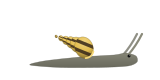
Anentome helenaA yellow-and-brown striped predatory snail kept to control bladder, ramshorn and trumpet snails; it breeds slowly and never becomes a pest.
1 in · 3+ gal · 70–81°F · pH 7.2–8 - Fits
Red swamp crayfish
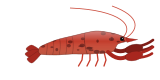
Procambarus clarkiiA hardy but aggressive American crayfish that digs burrows, wrecks plants and eats snails and fish; invasive in many countries and banned in the EU.
3.9 in · 25+ gal · 68–79°F · pH 7–8.5 - Fits
Redclaw crayfish
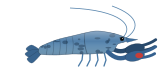
Cherax quadricarinatusA large blue-green crayfish with red patches on the claws, up to 8 inches; a predator and plant shredder best kept alone under a tight lid.
7.9 in · 47+ gal · 64–82°F · pH 7.2–8.2 - Fits
Elephantnose fish
Gnathonemus petersiiAn African fish that finds food with a weak electric field and a long trunk-like chin; nocturnal, very sensitive and in need of sand.
8.9 in · 76+ gal · 73–82°F · pH 6–7.5 - Fits
Figure eight puffer
Dichotomyctere ocellatusA small puffer with a figure-eight pattern for fresh or slightly brackish water; it loves snails and nips slow tank mates.
3.1 in · 22+ gal · 72–79°F · pH 6.5–7.5 - Fits
Kissing gourami
Helostoma temminckiiThe famous kissing fish grows to about 10 inches and can live over 20 years; its kisses are really contests for dominance.
9.8 in · 95+ gal · 72–86°F · pH 6–8 - Fits
Paradise fish
Macropodus opercularisOne of Europe's first aquarium fish: a hardy, striped labyrinth fish that lives without a heater, but males are pugnacious.
3.1 in · 23+ gal · 61–72°F · pH 6–8 - Fits
Silver mono
Monodactylus argenteusA silver, diamond-shaped schooling fish from mangroves that moves towards marine water as it grows; it needs a school and a large brackish tank.
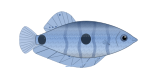
6.7 in · 47+ gal · 75–82°F · pH 7.5–8.5
Risky
- With care
Neon tetra
Paracheirodon innesiRed-tailed black shark attacks fish with a similar shape or colour: Neon tetra.
1.2 in · 17+ gal · 70–77°F · pH 5–7 - With care
Harlequin rasbora
Trigonostigma heteromorphaRed-tailed black shark attacks fish with a similar shape or colour: Harlequin rasbora.
1.4 in · 17+ gal · 73–81°F · pH 6–7 - With care
Fancy guppy
Poecilia reticulataRed-tailed black shark attacks fish with a similar shape or colour: Fancy guppy.
1.4 in · 13+ gal · 75–81°F · pH 7–8 - With care
Panda corydoras
Corydoras pandaRed-tailed black shark (aggressive) will bully the peaceful Panda corydoras.
1.6 in · 17+ gal · 72–77°F · pH 6–7.2 - With care
Otocinclus
Otocinclus vittatusRed-tailed black shark (aggressive) will bully the peaceful Otocinclus.
1.4 in · 17+ gal · 72–79°F · pH 6–7.2 - With care
Cherry shrimp
Neocaridina davidiRed-tailed black shark (aggressive) will bully the peaceful Cherry shrimp.
1.6 in · 4+ gal · 72–75°F · pH 6.5–7.8 - With care
Tiger barb
Puntigrus tetrazonaRed-tailed black shark attacks fish with a similar shape or colour: Tiger barb.
2.2 in · 32+ gal · 72–79°F · pH 6–7.5 - With care
Amano shrimp
Caridina multidentataRed-tailed black shark (aggressive) will bully the peaceful Amano shrimp.
2 in · 7+ gal · 72–77°F · pH 6.5–7.5 - With care
Black neon tetra
Hyphessobrycon herbertaxelrodiRed-tailed black shark attacks fish with a similar shape or colour: Black neon tetra.
1.4 in · 23+ gal · 73–81°F · pH 5.5–7.5 - With care
Black widow tetra
Gymnocorymbus ternetziRed-tailed black shark (aggressive) will bully the peaceful Black widow tetra.
2.4 in · 22+ gal · 68–79°F · pH 6–7 - With care
Blue dolphin cichlid
Cyrtocara mooriiBlue dolphin cichlid can eat young or small Red-tailed black shark; adults are big enough to be safe.
9.8 in · 80+ gal · 77–81°F · pH 8–8.5 - With care
Bristlenose pleco
Ancistrus cf. cirrhosusRed-tailed black shark (aggressive) will bully the peaceful Bristlenose pleco.
4.9 in · 17+ gal · 70–79°F · pH 5.5–7.5
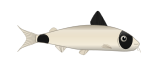
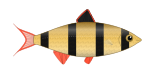
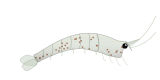
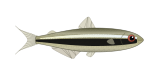
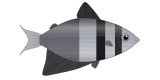
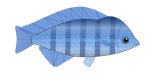
And 95 more in the species catalog.
Avoid
- Avoid
Chinese algae eater
Gyrinocheilus aymonieriTwo territorial lookalikes clash.
11 in · 95+ gal · 72–79°F · pH 6–8 - Avoid
Iridescent shark
Pangasianodon hypophthalmusIridescent shark can eat Red-tailed black shark: prey body depth 2.8 cm ≤ mouth 32.5 cm.
51.2 in · 4532+ gal · 72–79°F · pH 6.5–7.5 - Avoid
Oscar
Astronotus ocellatusOscar can eat Red-tailed black shark: prey body depth 2.8 cm ≤ mouth 12.3 cm.
13.8 in · 168+ gal · 72–77°F · pH 6–7.5 - Avoid
Rainbow shark
Epalzeorhynchos frenatumSharks fight lookalike sharks.
5.9 in · 76+ gal · 75–79°F · pH 6.5–8 - Avoid
Siamese algae eater
Crossocheilus oblongusAttacks lookalike algae eaters.
5.9 in · 95+ gal · 75–79°F · pH 6.5–8 - Avoid
African clawed frog
Xenopus laevisAfrican clawed frog should only be kept in a single-species tank.
5.9 in · 13+ gal · 63–75°F · pH 6.8–7.8 - Avoid
Marbled crayfish
Procambarus virginalisMarbled crayfish should only be kept in a single-species tank.
3.9 in · 19+ gal · 64–77°F · pH 7–8 - Avoid
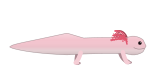
Axolotl
Ambystoma mexicanumAxolotl should only be kept in a single-species tank.
9.8 in · 13+ gal · 57–68°F · pH 6.5–8 - Avoid
Bala shark
Balantiocheilos melanopterusSilver shark can eat Red-tailed black shark: prey body depth 2.8 cm ≤ mouth 8.8 cm.
13.8 in · 269+ gal · 72–82°F · pH 6–8 - Avoid
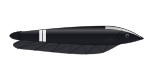
Black ghost knifefish
Apteronotus albifronsBlack ghost knifefish can eat Red-tailed black shark: prey body depth 2.8 cm ≤ mouth 10.0 cm.
19.7 in · 202+ gal · 73–82°F · pH 6–8 - Avoid
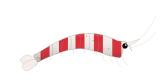
Crystal red shrimp
Caridina logemanniCrystal red shrimp should only be kept in a single-species tank.
1.2 in · 6+ gal · 68–77°F · pH 5.5–7 - Avoid
Jaguar cichlid
Parachromis managuensisJaguar cichlid can eat Red-tailed black shark: prey body depth 2.8 cm ≤ mouth 17.6 cm.
21.7 in · 202+ gal · 75–86°F · pH 7–8
And 14 more in the species catalog.
Every tank is different. Set yours up once (size, water, who already lives there) and each species is checked against it.
Plan my tank