Three spot gourami tank mates
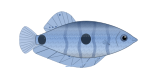
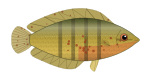
Three spot gourami: semi-aggressive, 5.9 in, fine on its own, swims in the top and middle of the tank and needs about 26 gallons. It eats fish that fit in its mouth. The list below checks every species in our catalog against it.
Each species is checked against three spot gouramis both ways: mouth size, fin nipping, temperament, territory, water overlap and keeper reports.
Good tank mates
- Fits
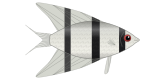
Angelfish
Pterophyllum scalareTall, graceful cichlids for tall tanks of 30 gallons and up; adults eat neon tetras and shrimp, so stock around them.
3.5 in · 32+ gal · 77–84°F · pH 6–7 - Fits
Blood parrot cichlid
hybridA man-made hybrid cichlid with a round body and a beak-like mouth that barely closes; usually gentle and rarely able to swallow tank mates.
7.9 in · 36+ gal · 72–82°F · pH 6.5–8 - Fits
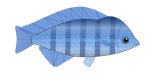
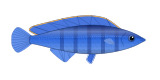
Blue dolphin cichlid
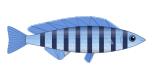
Cyrtocara mooriiA sky-blue Malawi cichlid with a fatty forehead hump; calm and sociable over open sand, but no match for boisterous mbuna.
9.8 in · 80+ gal · 77–81°F · pH 8–8.5 - Fits
Bristlenose pleco
Ancistrus cf. cirrhosusThe go-to glass cleaner: a compact 5-inch pleco with bushy whiskers on the males that needs a cave and vegetables, not just algae.
4.9 in · 17+ gal · 70–79°F · pH 5.5–7.5 - Fits
Chinese algae eater
Gyrinocheilus aymonieriA popular sucker-mouth 'cleaner' that reaches 11 inches and turns aggressive with age, sometimes rasping the slime coat off other fish.
11 in · 95+ gal · 72–79°F · pH 6–8 - Fits
Clown loach
Chromobotia macracanthusA bold orange-and-black loach that lives 20 years and grows over a foot long, so a proper group needs a 6-foot tank.
15.7 in · 202+ gal · 75–86°F · pH 5–7 - Fits
Common pleco
Pterygoplichthys pardalisThe classic store 'algae eater' that grows to nearly two feet, fouls the water and eats less algae with age; a fish for very large tanks only.
22.8 in · 203+ gal · 77–82°F · pH 7–7.5 - Fits
Convict cichlid
Amatitlania nigrofasciataA tough Central American cichlid that breeds almost anywhere, and is aggressive enough to attack fish several times its size.
5.9 in · 34+ gal · 75–82°F · pH 7–8 - Fits
Discus
Symphysodon aequifasciatus (species complex)The 'king of the aquarium': a disc-shaped Amazon cichlid in countless bred colours that needs warm, soft, very clean water.
5.5 in · 80+ gal · 79–86°F · pH 5–7 - Fits
Firemouth cichlid
Thorichthys meekiA Central American cichlid with a fiery red throat it flares when threatened; fairly calm for a cichlid but territorial when breeding.
4.7 in · 34+ gal · 75–82°F · pH 6.5–8.5 - Fits
Golden mbuna
Melanochromis auratusA striped gold mbuna and one of the most aggressive Malawi cichlids; it kills rival males, so plan a crowded harem tank of 55 gallons or more.
4.3 in · 64+ gal · 75–82°F · pH 7.6–8.8 - Fits
Jewel cichlid
Rubricatochromis bimaculatus (syn. Hemichromis bimaculatus)A blazing red West African cichlid that holds its territory year-round and turns extremely aggressive when spawning; best kept as a pair on its own.
5.9 in · 34+ gal · 72–82°F · pH 6–7.8 - Fits
Leopard sailfin pleco
Pterygoplichthys gibbicepsA tall-finned pleco with a brocade pattern that is sold at 2 inches and grows to about 20, needing a very large tank and heavy filtration.
19.7 in · 187+ gal · 77–86°F · pH 5–7 - Fits
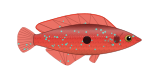
Peacock cichlid
Aulonocara jacobfreibergiThe peacocks of Lake Malawi: brilliant males, grey females, calmer than mbuna and gentle with plants, but they need fine sand to feed.
6.7 in · 135+ gal · 77–84°F · pH 7.5–9 - Fits
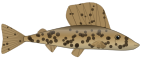
Rainbow shark
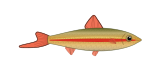
Epalzeorhynchos frenatumAn olive 'shark' with red fins, most often sold in its albino form; territorial toward lookalike bottom fish and best kept alone.
5.9 in · 76+ gal · 75–79°F · pH 6.5–8 - Fits
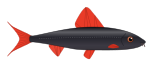
Red-tailed black shark
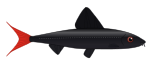
Epalzeorhynchos bicolorA velvet-black 'shark' with a red tail; beautiful but territorial, chasing lookalike bottom fish and its own kind as it ages.
4.9 in · 76+ gal · 72–79°F · pH 6.5–7.5 - Fits
Rosy barb
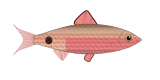
Pethia conchoniusA large, hardy barb whose males turn bright pink-red when breeding; suits cooler tanks that run without a heater.
3.9 in · 28+ gal · 64–72°F · pH 6–8 - Fits
Severum
Heros severus / Heros efasciatusA calm, large South American cichlid often kept with angelfish and catfish; eats soft plants and any fish that fits in its mouth.
7.9 in · 76+ gal · 72–84°F · pH 5.5–6.5 - Fits
Siamese algae eater
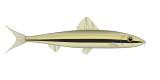
Crossocheilus oblongusA slim silver fish with a black stripe and one of the few that eats black beard algae; grows to about 6 inches and loves to jump.
5.9 in · 95+ gal · 75–79°F · pH 6.5–8 - Fits
Swordtail
Xiphophorus helleriiA large, very active livebearer whose males carry a sword-shaped tail; it needs a long tank, a lid and hard water.
6.3 in · 34+ gal · 72–82°F · pH 7–8 - Fits
Zebra mbuna
Maylandia zebraThe classic blue-and-black rock cichlid of Lake Malawi; one of the more aggressive mbuna, it needs hard alkaline water, rocks and a crowded mbuna-only tank.
6 in · 64+ gal · 77–80°F · pH 8–8.5 - Fits
Assassin snail
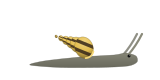
Anentome helenaA yellow-and-brown striped predatory snail kept to control bladder, ramshorn and trumpet snails; it breeds slowly and never becomes a pest.
1 in · 3+ gal · 70–81°F · pH 7.2–8 - Fits
Bladder snail
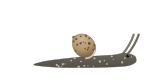
Physella acutaA small left-coiled snail that usually hitchhikes in on plants; a self-fertilising hermaphrodite, so a single one starts a colony.
0.6 in · 1+ gal · 63–84°F · pH 7–8 - Fits
Malaysian trumpet snail
Melanoides tuberculataA cone-shelled snail that lives in the substrate and stirs it; it breeds without a mate and gives birth to live young, so it fills a tank fast.
1 in · 2+ gal · 64–77°F · pH 7–8.5
And 27 more in the species catalog.
Risky
- With care
Bronze cory
Corydoras aeneusThree spot gourami can eat young or small Bronze cory; adults are big enough to be safe.
3 in · 23+ gal · 70–81°F · pH 6–8 - With care
Demasoni
Chindongo demasoni (syn. Pseudotropheus demasoni)Three spot gourami can eat young or small Demasoni; adults are big enough to be safe.
3 in · 64+ gal · 75–82°F · pH 8.2–8.5 - With care
Fairy cichlid
Neolamprologus brichardiThree spot gourami can eat young or small Fairy cichlid (Brichardi); adults are big enough to be safe.
3.5 in · 34+ gal · 73–79°F · pH 8–9 - With care
Goldfish
Carassius auratusGoldfish needs cool water; three spot gouramis need tropical heat.
5.9 in · 24+ gal · 50–75°F · pH 6.5–8 - With care
Kribensis
Pelvicachromis pulcherThree spot gourami eats small fish: Kribensis (PROP).
3.9 in · 23+ gal · 75–81°F · pH 6.5–7 - With care
Kuhli loach
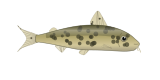
Pangio semicinctaThree spot gourami eats small fish: Kuhli loach (PROP).
3.9 in · 17+ gal · 70–79°F · pH 3.5–7 - With care
Molly
Poecilia sphenopsThree spot gourami can eat young or small Molly; adults are big enough to be safe.
3.1 in · 26+ gal · 70–82°F · pH 7–8.5 - With care
Pearl gourami
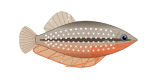
Trichopodus leeriiThree spot gourami attacks fish with a similar shape or colour: Pearl gourami.
4.7 in · 26+ gal · 75–86°F · pH 5.5–8 - With care
Peppered cory
Corydoras paleatusThree spot gourami can eat young or small Peppered cory; adults are big enough to be safe.
2.8 in · 22+ gal · 72–79°F · pH 6–7 - With care
Yellow lab
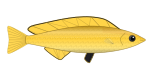
Labidochromis caeruleusThree spot gourami can eat young or small Yellow lab; adults are big enough to be safe.
3.2 in · 64+ gal · 73–79°F · pH 7.8–8.5 - With care
Dwarf orange crayfish
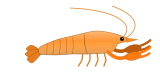
Cambarellus patzcuarensisThree spot gourami eats dwarf shrimp: Orange dwarf crayfish (CPO) (PROP: индивидуально).
1.6 in · 10+ gal · 64–79°F · pH 6.8–8 - With care
Agassiz's dwarf cichlid
Apistogramma agassiziiThree spot gourami can eat young or small Agassiz's dwarf cichlid; adults are big enough to be safe.
3 in · 17+ gal · 72–84°F · pH 5–6.5
And 15 more in the species catalog.
Avoid
- Avoid
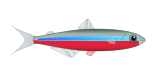
Neon tetra
Paracheirodon innesiThree spot gourami can eat Neon tetra: prey body depth 0.7 cm ≤ mouth 3.8 cm.
1.2 in · 17+ gal · 70–77°F · pH 5–7 - Avoid
Harlequin rasbora
Trigonostigma heteromorphaThree spot gourami can eat Harlequin rasbora: prey body depth 1.1 cm ≤ mouth 3.8 cm.
1.4 in · 17+ gal · 73–81°F · pH 6–7 - Avoid
Fancy guppy
Poecilia reticulataThree spot gourami can eat Fancy guppy: prey body depth 0.8 cm ≤ mouth 3.8 cm.
1.4 in · 13+ gal · 75–81°F · pH 7–8 - Avoid
Panda corydoras
Corydoras pandaThree spot gourami can eat Panda corydoras: prey body depth 2.4 cm ≤ mouth 3.8 cm.
1.6 in · 17+ gal · 72–77°F · pH 6–7.2 - Avoid
Otocinclus
Otocinclus vittatusThree spot gourami can eat Otocinclus: prey body depth 0.7 cm ≤ mouth 3.8 cm.
1.4 in · 17+ gal · 72–79°F · pH 6–7.2 - Avoid
Cherry shrimp
Neocaridina davidiThree spot gourami can eat Cherry shrimp: prey body depth 0.8 cm ≤ mouth 3.8 cm.
1.6 in · 4+ gal · 72–75°F · pH 6.5–7.8 - Avoid
Betta
Betta splendensBetta attacks fish with a similar shape or colour: Three spot gourami.
2.8 in · 11+ gal · 72–86°F · pH 6–7.5 - Avoid
Tiger barb
Puntigrus tetrazonaThree spot gourami can eat Tiger barb: prey body depth 2.5 cm ≤ mouth 3.8 cm.
2.2 in · 32+ gal · 72–79°F · pH 6–7.5 - Avoid
Amano shrimp
Caridina multidentataThree spot gourami can eat Amano shrimp: prey body depth 1.0 cm ≤ mouth 3.8 cm.
2 in · 7+ gal · 72–77°F · pH 6.5–7.5 - Avoid
Black neon tetra
Hyphessobrycon herbertaxelrodiThree spot gourami can eat Black neon tetra: prey body depth 0.8 cm ≤ mouth 3.8 cm.
1.4 in · 23+ gal · 73–81°F · pH 5.5–7.5 - Avoid
Black widow tetra
Gymnocorymbus ternetziThree spot gourami can eat Black widow tetra: prey body depth 2.4 cm ≤ mouth 3.8 cm.
2.4 in · 22+ gal · 68–79°F · pH 6–7 - Avoid
Cardinal tetra
Paracheirodon axelrodiThree spot gourami can eat Cardinal tetra: prey body depth 0.8 cm ≤ mouth 3.8 cm.
1.4 in · 17+ gal · 73–81°F · pH 4–6
And 59 more in the species catalog.
Every tank is different. Set yours up once (size, water, who already lives there) and each species is checked against it.
Plan my tank