Bottom dwelling fish
Bottom dwellers use the part of the tank mid-water schools leave empty. Soft sand protects the barbels of corydoras and loaches.
- …
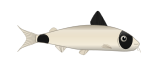
Panda corydoras
Corydoras pandaFriendly armoured catfish that sift the sand in groups; need soft substrate and a group of six or more.
1.6 in · 17+ gal · 72–77°F · pH 6–7.2 - …
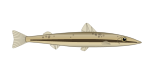
Otocinclus
Otocinclus vittatusTiny algae grazers for mature planted tanks; keep six or more and supplement with vegetables.
1.4 in · 17+ gal · 72–79°F · pH 6–7.2 - …
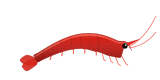
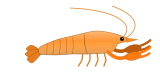
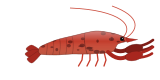
Cherry shrimp
Neocaridina davidiBright red dwarf shrimp that graze all day and breed in a planted tank; tiny bioload, but fry are snacks for most fish.
1.6 in · 4+ gal · 72–75°F · pH 6.5–7.8 - …
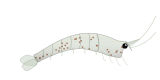
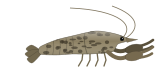
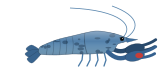
Amano shrimp
Caridina multidentataThe best-known algae-eating shrimp, made famous by Takashi Amano; bigger than cherries and a good fit for planted community tanks.
2 in · 7+ gal · 72–77°F · pH 6.5–7.5 - …
Blue dolphin cichlid
Cyrtocara mooriiA sky-blue Malawi cichlid with a fatty forehead hump; calm and sociable over open sand, but no match for boisterous mbuna.
9.8 in · 80+ gal · 77–81°F · pH 8–8.5 - …
Bristlenose pleco
Ancistrus cf. cirrhosusThe go-to glass cleaner: a compact 5-inch pleco with bushy whiskers on the males that needs a cave and vegetables, not just algae.
4.9 in · 17+ gal · 70–79°F · pH 5.5–7.5 - …
Bronze cory
Corydoras aeneusThe most widely kept cory: a tough bronze-green or albino catfish that shoals along the bottom and handles a broad range of water.
3 in · 23+ gal · 70–81°F · pH 6–8 - …
Cherry barb
Puntius titteyaOne of the most peaceful barbs: males glow cherry red and leave fins alone, making it great for planted community tanks.
2 in · 17+ gal · 73–81°F · pH 6–8 - …
Chinese algae eater
Gyrinocheilus aymonieriA popular sucker-mouth 'cleaner' that reaches 11 inches and turns aggressive with age, sometimes rasping the slime coat off other fish.
11 in · 95+ gal · 72–79°F · pH 6–8 - …
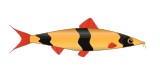
Clown loach
Chromobotia macracanthusA bold orange-and-black loach that lives 20 years and grows over a foot long, so a proper group needs a 6-foot tank.
15.7 in · 202+ gal · 75–86°F · pH 5–7 - …
Common pleco
Pterygoplichthys pardalisThe classic store 'algae eater' that grows to nearly two feet, fouls the water and eats less algae with age; a fish for very large tanks only.
22.8 in · 203+ gal · 77–82°F · pH 7–7.5 - …
Convict cichlid
Amatitlania nigrofasciataA tough Central American cichlid that breeds almost anywhere, and is aggressive enough to attack fish several times its size.
5.9 in · 34+ gal · 75–82°F · pH 7–8 - …
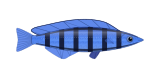
Demasoni
Chindongo demasoni (syn. Pseudotropheus demasoni)A small blue-and-black striped mbuna with outsized aggression; it attacks much larger fish and is kept only in large, crowded groups.
3 in · 64+ gal · 75–82°F · pH 8.2–8.5 - …
Fairy cichlid
Neolamprologus brichardiA graceful Tanganyika cichlid with a lyre tail; one pair grows into a family colony that guards its rocks year-round.
3.5 in · 34+ gal · 73–79°F · pH 8–9 - …
Firemouth cichlid
Thorichthys meekiA Central American cichlid with a fiery red throat it flares when threatened; fairly calm for a cichlid but territorial when breeding.
4.7 in · 34+ gal · 75–82°F · pH 6.5–8.5 - …
Golden mbuna
Melanochromis auratusA striped gold mbuna and one of the most aggressive Malawi cichlids; it kills rival males, so plan a crowded harem tank of 55 gallons or more.
4.3 in · 64+ gal · 75–82°F · pH 7.6–8.8 - …
Goldfish
Carassius auratusThe coldwater classic with hundreds of breeds; lives 10–15 years or more, makes lots of waste and needs a roomy, well-filtered tank.
5.9 in · 24+ gal · 50–75°F · pH 6.5–8 - …
Jewel cichlid
Rubricatochromis bimaculatus (syn. Hemichromis bimaculatus)A blazing red West African cichlid that holds its territory year-round and turns extremely aggressive when spawning; best kept as a pair on its own.
5.9 in · 34+ gal · 72–82°F · pH 6–7.8 - …
Kribensis
Pelvicachromis pulcherA small West African cichlid whose female has a bright belly; a cave-spawning pair digs pits and guards fry along the bottom.
3.9 in · 23+ gal · 75–81°F · pH 6.5–7 - …
Kuhli loach
Pangio semicinctaA banded, eel-like loach of about 4 inches that burrows by day and explores the bottom as a group in the evening; needs soft sand.
3.9 in · 17+ gal · 70–79°F · pH 3.5–7 - …
Leopard sailfin pleco
Pterygoplichthys gibbicepsA tall-finned pleco with a brocade pattern that is sold at 2 inches and grows to about 20, needing a very large tank and heavy filtration.
19.7 in · 187+ gal · 77–86°F · pH 5–7 - …
Multies
Neolamprologus multifasciatusThe smallest Tanganyika cichlid, about 2 inches, living in empty snail shells; a colony carves the sand into tiny fiercely guarded plots.
1.8 in · 13+ gal · 77–80°F · pH 8–8.5 - …
Oscar
Astronotus ocellatusA big, intelligent Amazon cichlid that learns its owner and begs for food; it swallows any fish that fits and rearranges the tank.
13.8 in · 168+ gal · 72–77°F · pH 6–7.5 - …
Peacock cichlid
Aulonocara jacobfreibergiThe peacocks of Lake Malawi: brilliant males, grey females, calmer than mbuna and gentle with plants, but they need fine sand to feed.
6.7 in · 135+ gal · 77–84°F · pH 7.5–9 - …
Peppered cory
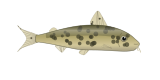
Corydoras paleatusOne of the hardiest corys: a mottled catfish that sifts sand in a group of six and prefers slightly cooler water.
2.8 in · 22+ gal · 72–79°F · pH 6–7 - …
Rainbow shark
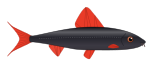
Epalzeorhynchos frenatumAn olive 'shark' with red fins, most often sold in its albino form; territorial toward lookalike bottom fish and best kept alone.
5.9 in · 76+ gal · 75–79°F · pH 6.5–8 - …
Ram cichlid
Mikrogeophagus ramireziA brilliantly coloured dwarf cichlid from the Orinoco llanos that needs warm, very clean water and calm tank mates.
1.6 in · 17+ gal · 81–86°F · pH 4–7 - …
Red-tailed black shark
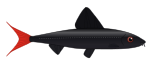
Epalzeorhynchos bicolorA velvet-black 'shark' with a red tail; beautiful but territorial, chasing lookalike bottom fish and its own kind as it ages.
4.9 in · 76+ gal · 72–79°F · pH 6.5–7.5 - …
Rosy barb
Pethia conchoniusA large, hardy barb whose males turn bright pink-red when breeding; suits cooler tanks that run without a heater.
3.9 in · 28+ gal · 64–72°F · pH 6–8 - …
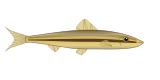
Siamese algae eater
Crossocheilus oblongusA slim silver fish with a black stripe and one of the few that eats black beard algae; grows to about 6 inches and loves to jump.
5.9 in · 95+ gal · 75–79°F · pH 6.5–8 - …
Yellow lab
Labidochromis caeruleusA lemon-yellow mbuna that is one of the calmest cichlids in Lake Malawi and the usual first choice for a Malawi tank.
3.2 in · 64+ gal · 73–79°F · pH 7.8–8.5 - …
Zebra mbuna
Maylandia zebraThe classic blue-and-black rock cichlid of Lake Malawi; one of the more aggressive mbuna, it needs hard alkaline water, rocks and a crowded mbuna-only tank.
6 in · 64+ gal · 77–80°F · pH 8–8.5 - …
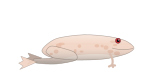
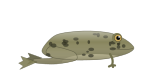
African clawed frog
Xenopus laevisA fully aquatic frog, most often sold as an albino; easy and long-lived, but a predator that eats any fish it can fit in its mouth.
5.9 in · 13+ gal · 63–75°F · pH 6.8–7.8 - …
African dwarf frog
Hymenochirus boettgeriA small, fully aquatic frog of up to 2 inches that can share a tank with peaceful fish, as long as it is target-fed.
2 in · 7+ gal · 75–77°F · pH 6.6–7.8 - …
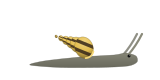
Assassin snail
Anentome helenaA yellow-and-brown striped predatory snail kept to control bladder, ramshorn and trumpet snails; it breeds slowly and never becomes a pest.
1 in · 3+ gal · 70–81°F · pH 7.2–8 - …
Bladder snail
Physella acutaA small left-coiled snail that usually hitchhikes in on plants; a self-fertilising hermaphrodite, so a single one starts a colony.
0.6 in · 1+ gal · 63–84°F · pH 7–8 - …
Dwarf orange crayfish
Cambarellus patzcuarensisA bright orange crayfish of about 1.5 inches and the only popular crayfish that fits a planted tank with peaceful fish.
1.6 in · 10+ gal · 64–79°F · pH 6.8–8 - …
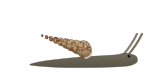
Malaysian trumpet snail
Melanoides tuberculataA cone-shelled snail that lives in the substrate and stirs it; it breeds without a mate and gives birth to live young, so it fills a tank fast.
1 in · 2+ gal · 64–77°F · pH 7–8.5 - …
Marbled crayfish
Procambarus virginalisThe only known clonal crayfish: every one is female and breeds without males, so a single animal can found a colony of hundreds.
3.9 in · 19+ gal · 64–77°F · pH 7–8 - …
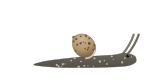
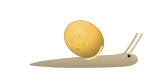
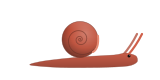
Mystery snail
Pomacea diffusaThe most popular large aquarium snail; it leaves healthy plants alone and lays its eggs above the waterline, so numbers are easy to control.
2.2 in · 7+ gal · 68–82°F · pH 7–8 - …
Ramshorn snail
Planorbarius corneusThe classic flat-coiled snail every fishkeeper knows; it cleans up film and leftovers, breeds easily, and the red form is especially popular.
1.4 in · 4+ gal · 70–81°F · pH 7–8 - …
Red swamp crayfish
Procambarus clarkiiA hardy but aggressive American crayfish that digs burrows, wrecks plants and eats snails and fish; invasive in many countries and banned in the EU.
3.9 in · 25+ gal · 68–79°F · pH 7–8.5 - …
Redclaw crayfish
Cherax quadricarinatusA large blue-green crayfish with red patches on the claws, up to 8 inches; a predator and plant shredder best kept alone under a tight lid.
7.9 in · 47+ gal · 64–82°F · pH 7.2–8.2 - …
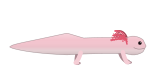
Axolotl
Ambystoma mexicanumA Mexican salamander that keeps its feathery gills for life; it needs cool water below 68°F, so it never shares a tropical tank.
9.8 in · 13+ gal · 57–68°F · pH 6.5–8 - …
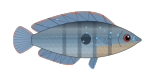
Agassiz's dwarf cichlid
Apistogramma agassiziiAn Amazon dwarf cichlid whose males carry a lyre-shaped tail; prefers soft, acidic water and breeds in caves.
3 in · 17+ gal · 72–84°F · pH 5–6.5 - …
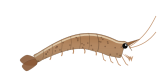
Bamboo shrimp
Atyopsis moluccensisA large, fully peaceful shrimp that catches floating food with fans on its front legs; it needs strong flow and a mature tank or it starves.
3.1 in · 17+ gal · 73–82°F · pH 6.5–7.5 - …
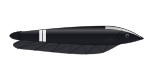
Black ghost knifefish
Apteronotus albifronsA nocturnal electric fish that glides by rippling a single long fin; it grows to nearly 20 inches and eventually eats small tank mates.
19.7 in · 202+ gal · 73–82°F · pH 6–8 - …
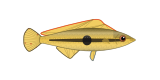
Blue acara
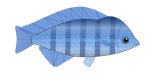
Andinoacara pulcherThe classic acara with a blue sheen: calm for a 6-inch cichlid, but a keen digger that will swallow any fish that fits in its mouth.
5.9 in · 34+ gal · 72–82°F · pH 6.5–8
And 48 more in the species catalog.
Every tank is different. Set yours up once (size, water, who already lives there) and each species is checked against it.
Plan my tank